From community vulnerability to resilience – five key lessons from European cities
A city can be resilient only if its communities are resilient. However, multiple and overlapping crises are making city neighbourhoods and their communities more vulnerable. How can European cities move from vulnerability to resilience?
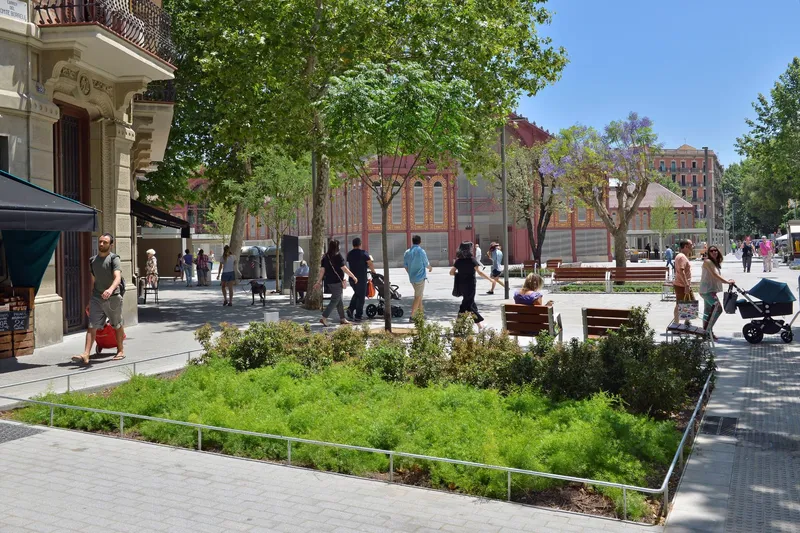
What do these impactful initiatives have in common? They all have the potential to make our communities healthier, greener, more inclusive, economically more vibrant, and better prepared to address the current crises and the next one.
Five key lessons
These five key lessons emerged from the experience of European cities.
Developing integrated solutions to address intersecting crises can deliver significant co-benefits.
Community initiatives such as Bucharest Sector VI’s local food bank and Nantes’ Nourishing Landscapes contribute to a circular economy food system while reducing food insecurity and enhancing inclusion. The collapse of the Morandi Bridge, with its heavy human tool, prompted Genoa to initiate the Polcevera Park and the Red Circle project. The initiative aims at rebuilding the neighbourhood and strengthen its resilience to multiple shocks and stresses, including floods, landslides and rising temperatures.
Cities are developing new approaches and tools to measure the co-benefits of initiatives. For example, Paris’ OASIS Schoolyard project has developed an innovative evaluation method to assess how making schoolyards greener and more playful improves pupils’ well-being.
Adopting inclusive participatory planning informed by a vulnerability assessment is critical to meet the needs of all community members and foster their empowerment.
Where one lives, what one does for a living, and individual characteristics – such as age and disability – determine the level of vulnerability to shocks and stresses. An integrated assessment of all vulnerability factors in the community is therefore a key input to participatory planning. For instance, Rotterdam’s Resilient BoTu 2028 programme relies on a benchmarking tool to assess and monitor multiple dimensions of vulnerability in the BoTU district.
Vulnerability factors are often accompanied by reduced representation and voice in local decision-making. Participatory planning is thus most effective when it is combined with processes to empower communities, such as participatory budgeting, namely a process through which communities make decisions on spending priorities for a portion of the local budget. For instance, Lisbon’s green participatory budgeting engages communities in the identification of local initiatives to improve sustainability, resilience and environmental outcomes. In the same vein, reaching out to groups who may not have internet access can help ensure that digitalisation does not contribute to further marginalise vulnerable groups.
Investing in inclusive public spaces and green areas is a strategic entry point for strengthening resilience and reducing vulnerability factors.
Inclusive public and green spaces are safe and accessible for all community members, including people with disabilities, women and children. During the COVID-19 lockdown, Milan implemented pilot projects to close off streets after school hours so that children could have a safe place to meet and play. In Barcelona, women’s groups are consulted to gauge their sense of safety when using public spaces and identify interventions that make public spaces safer for women and children.
Adopting a vulnerability lens when planning initiatives to green neighbourhoods is crucial to reduce the risk of gentrification. Cities are taking measures to preserve or expand social and affordable housing to prevent displacement of lower-income households from neighbourhoods undergoing transformation.
Scaling up initiatives requires flexibility, coordination and citywide enabling investments.
Flexibility is essential when it comes to responding to community needs. Barcelona’s Superblock programme, which aims to transform mobility patterns and reclaim public spaces within a neighbourhood, has embedded flexibility in its design. Under the programme, a Neighbourhood Action is prepared in each project site based on a participatory approach.
Scaling up initiatives also requires coordination to manage shared responsibilities within a multi-level governance system. Cities have been experimenting with new institutional models to enhance coordination – for instance by creating the role of the Chief Resilience Officer.
Citywide enabling infrastructure investments are essential to scaling up promising initiatives. The scaling up of Barcelona’s Superblock programme has been made possible by citywide investments to ensure that every city dweller has access to modern public transport.
Strengthening the financial capacity of cities to address multiple crises requires a multi-pronged approach to support the diversification and optimal use of their financial resources.
The financial capacity of cities to weather multiple crises will continue to depend on the extent of the support available from higher tiers of government, in particular predictable transfers. The role of International Financial Institutions and national Public Development Banks will also remain critical to support cities in mobilising public and private finance.
Cities with more robust own-source revenues are better prepared to face and recover from a crisis. And they can strengthen own-source revenues by improving collection efficiency or creating new revenue streams (through, for instance, land value capture tools).
Seven enabling city actions
What can cities do to enable community initiatives to succeed? We found that there are seven enabling actions that cities can take to strengthen resilience and ensure that vulnerable groups are not left behind in our communities. These seven actions are inter-linked and are part of an iterative process.
Learn more about what European cities are doing to build community resilience in our latest Technical Brief.
Post published: October 2022
Author: Elisa Muzzini, Senior Technical Advisor for Urban and Regional Development, CEB
[1] BoTu comprises the adjoining neighbourhoods of Bospolder and Tussendijken in Rotterdam.
Related publications
-
Technical brief - From Community Vulnerability to Resilience
Fostering dialogue among city practitioners in European countries on ways to strengthen resilience and address vulnerability in city … Published: September 2022 Read