News
CEB and Türkiye sign loans to strengthen earthquake resilience and sustainable mobility
12 February 2026
ANKARA – During Governor Carlo Monticelli’s first visit to Türkiye, the Council of Europe Development Bank (CEB) and the Ministry of Treasury and Finance signed two loan agreements totalling €280 million for earthquake preparedness and sustainable urban transport in Istanbul.
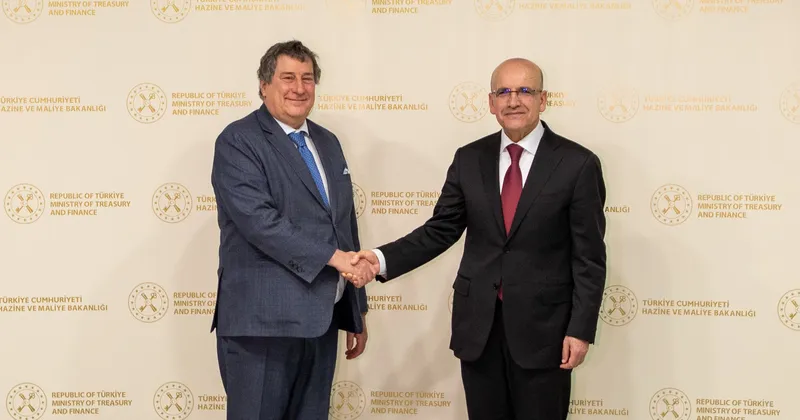
With a new €230 million loan the CEB will continue financing the Istanbul Seismic Risk Mitigation and Emergency Preparedness Project (ISMEP), which the authorities have been implementing since 2006, to strengthen the city’s resilience to major earthquakes through an enhanced disaster-management system. In parallel, a new €50 million CEB loan will expand the financing to the Marmaray Commuter Rail Project, a cornerstone of Istanbul’s public transport network.
“Our portfolio in Türkiye has expanded significantly since the 2023 earthquakes, reflecting the Bank’s mandate to support resilience and inclusion through the financing of social infrastructure. The two loans we signed today are a testimony to our strong partnership with Türkiye over the last seven decades,” said Governor Monticelli.
Welcoming the Governor, Minister Mehmet Şimşek stated: “We are pleased to welcome Governor Monticelli on his first official visit to Türkiye. The agreements signed today reflect the depth of our long-standing partnership with the Council of Europe Development Bank. The financing for ISMEP will further strengthen Istanbul’s earthquake resilience, particularly by enhancing the safety of critical healthcare infrastructure. The additional support for Marmaray will improve sustainable urban mobility and connectivity.”
The new ISMEP loan will enhance the seismic resilience of two major public healthcare facilities, Prof. Dr. Cemil Taşcıoğlu City Hospital and Kartal Dr. Lütfi Kırdar City Hospital, ensuring continued access to essential medical services for millions, especially the most vulnerable groups. The investment is expected to directly benefit around 20 000 patients per day.
This is the fifth CEB loan under the ISMEP project and yet another example of the CEB’s long-standing engagement in disaster prevention and resilience in Türkiye. Following the devastating earthquakes in February 2023, the CEB responded rapidly, approving more than €500 million in loans for post-earthquake reconstruction and close to 2 million euros in grants for earthquake mitigation and preparedness across the country.
The Marmaray Commuter Rail Project modernises and integrates suburban rail lines on both sides of the Bosporus through a 76km corridor, enabling safe, affordable and low-emission mobility for around half a million passengers each day.
The new additional €50 million CEB loan will partially finance improved connectivity to Haydarpaşa Station, a vital rail hub on the Asian side of the city, strengthening links between Istanbul and the national rail network. It will also ensure the showcasing and preservation of archaeological remains of exceptional value, which were discovered during the works at the station site.
During his visit to Türkiye, Governor Monticelli also attended the inauguration of a new health centre in Istanbul under the Strengthening Healthcare Infrastructure for All (SHIFA) Project. SHIFA, a €140 million EU-funded initiative implemented by the Ministry of Health of the Republic of Türkiye with support from the CEB, aims to improve healthcare access for refugees, vulnerable people and their host communities across Türkiye.
Türkiye is a founding member of the CEB, which celebrates its 70th anniversary this year, and one of its largest shareholders. Since 1956, the Bank has provided more than €9 billion in financing to Türkiye spanning multiple sectors, including post‑earthquake recovery, seismic‑resilient public infrastructure, urban transport, MSME financing, municipal resilience, and the health sector.
The Council of Europe Development Bank (CEB) is a multilateral development bank with an exclusively social mandate from its 43 member countries. The CEB finances investment and provides technical assistance in social sectors such as education, health and affordable housing, while focusing on the needs of vulnerable people, as well as on the social dimensions of climate change and the environment. Borrowers include governments, local and regional authorities, public and private banks, non-profit organisations and others. The CEB, which has a triple-A credit rating, funds itself through international capital markets. In addition, the CEB receives funds from donors to complement its activities.