News
The CEB publishes a study on vulnerability
02 December 2016
 PARIS –
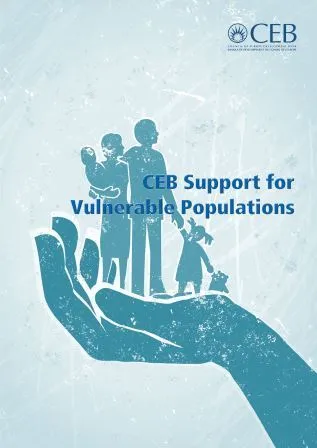
The CEB released its latest economic study “CEB Support for Vulnerable
Populations.”
PARIS –
The CEB released its latest economic study “CEB Support for Vulnerable
Populations.”
This publication presents an overview of the CEB’s long-standing experience in improving the living conditions of vulnerable populations in Europe. It also assesses recent trends in and sources of vulnerability across CEB member states and their implications for the Bank’s role in addressing these increasingly complex and cross-cutting trends and challenges.
KEY FINDINGS
- The study describes vulnerability as
a complex, multifaceted and elusive phenomenon. Related not only to income
limitations but also to a variety of other factors such as age, ethnicity,
social status, illness, disability as well as to climate change, vulnerability
requires a comprehensive approach. This implies recognising the interrelated
implications of a range of life domains such as employment, health and
long-term care, education and housing. One of the findings of the study is that
initiatives to promote social inclusion need to take place on various fronts
and at multiple levels. Depending on the local context and the targeted
population, comprehensive responses can thus provide more focused support and
deliver greater inclusiveness.
- From a sectoral standpoint, the
focus of the study is placed on access to adequate housing and local
infrastructure, health and education, employment and financial inclusion, as
well as climate change adaptation, in connection with the CEB’s fields of
action. Particular attention is given to migrants and their families, whose
situation makes them an especially vulnerable group with needs ranging from
emergency aid to long-term assistance. The study shows how, by financing social
projects, the CEB makes its unique contribution to alleviating vulnerability
situations and to supporting the resilience of individuals and local economies.
- One of the key lessons learned from
the CEB’s experience in financing projects targeting vulnerable populations is
that these projects are extremely complex and that it is vital to achieve the
sustainability of successful results in the long term.
- To conclude, the study explores ways
of enhancing the Bank’s relevance and social impact for the populations in
need, which are increasing in both number and profile. Building on the Bank’s
experience of six decades in this field, the final chapter of the study
emphasises how important it is to move beyond the concept of inclusion and
implement investment projects in order to ensure that the lives of the many who
are vulnerable in society are further improved and protected.
The full study and its abstract are available on the
CEB’s website.
Set up in 1956, the CEB (Council of Europe Development Bank) has 41 member states. Twenty-two Central, Eastern and South Eastern European countries, forming the Bank's target countries, are listed among the member states. As a major instrument of the policy of solidarity in Europe, the Bank finances social projects by making available resources raised in conditions reflecting the quality of its rating (Aa1 with Moody's, outlook stable, AA+ with Standard & Poor's, outlook stable and AA+ with Fitch Ratings, outlook stable). It thus grants loans to its member states, and to financial institutions and local authorities in its member states for the financing of projects in the social sector, in accordance with its Articles of Agreement.
Related sector
Related publications
-
CEB Support for Vulnerable Populations
This study examines the Council of Europe Development Bank's (CEB) efforts to bolster social cohesion in Europe by … Published: December 2016 Read -
CEB Support for Vulnerable Populations - Abstract
This study presents an overview of the Council of Europe Development Bank's (CEB) long-standing efforts to improve the … Published: December 2016 Read