After the final whistle: investing in sport for all
Whether it’s the football World Cup or the Olympic Games, for a few weeks at a time millions across the world share moments of joy, heartbreak and hope.
But when the final whistle is blown, how do we preserve the magic of sport in everyday life – and make sure that everyone can share in its benefits?
Bringing people together
It was an unusually cold and rainy morning for early June in Paris. Yet, well before 9 a.m., UCPA Sport Centre in the city’s 19th arrondissement was already buzzing with activity.
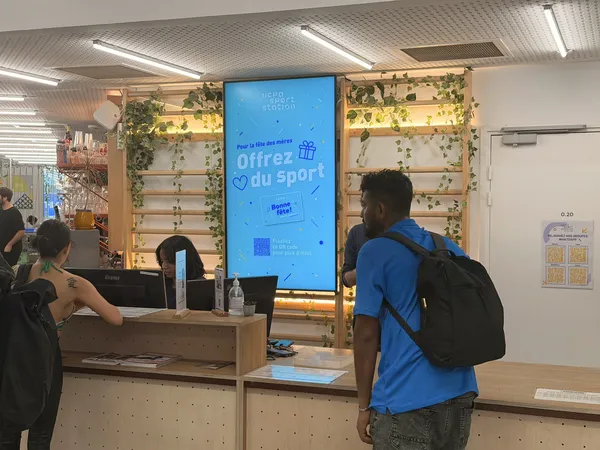
Young people from a local collège (middle school) came to play padel. A few people were working remotely from the café. Others lingered over coffee before heading to the climbing walls and fitness areas.
Later in the day, young professionals from nearby businesses, as well as young people living in the neighborhood, would arrive for lunchtime matches, while hostel guests would make use of the very same sports facilities.
“We have an extremely diverse public,” says Guillaume Zrihen, Director of UCPA Sport Station Paris, as he leads us through the building.
Part sports centre, part youth hostel and part community hub, the UCPA Sport Station was designed precisely with this objective in mind: bringing people together.
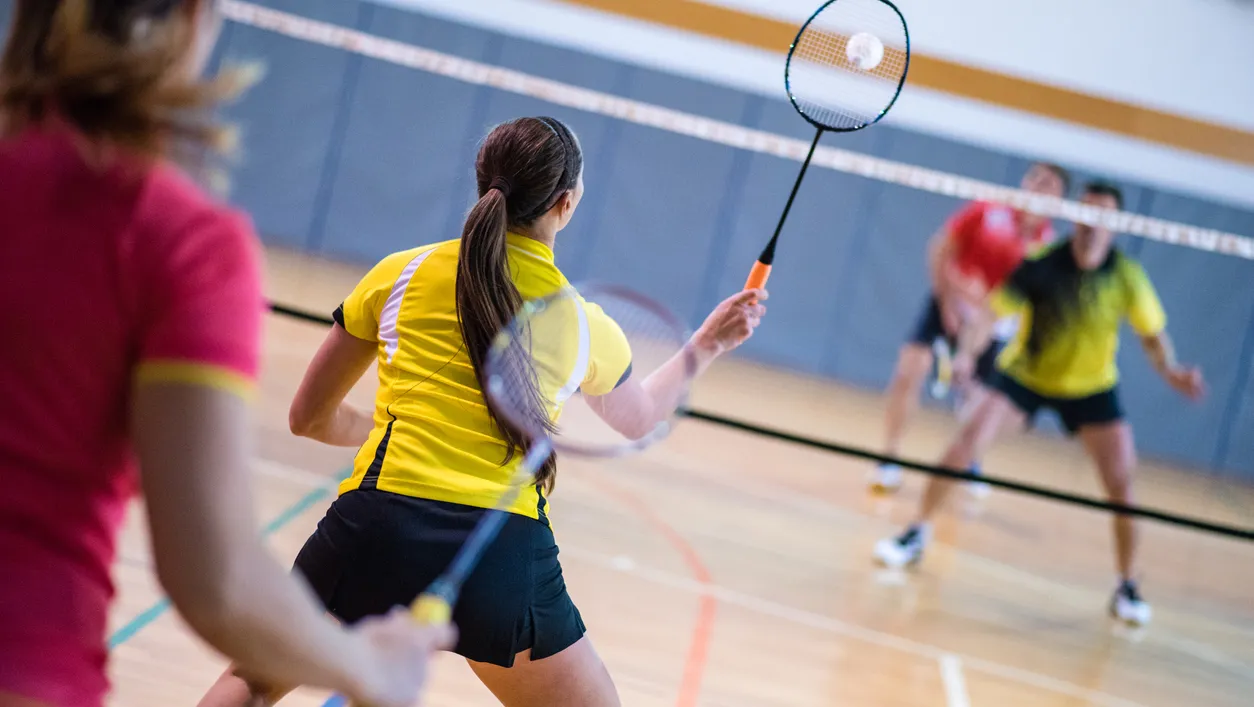
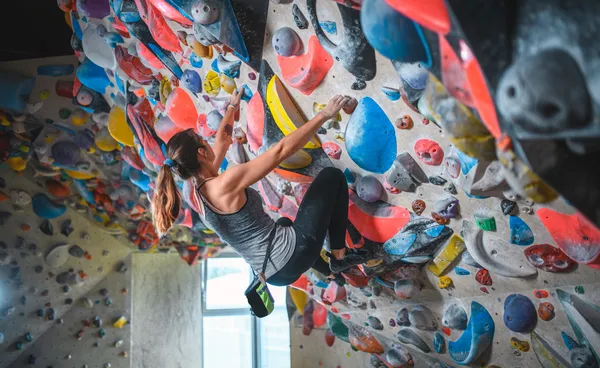
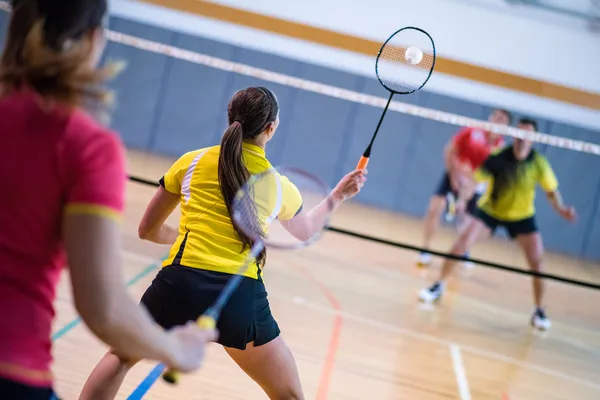
The centre combines climbing walls, badminton courts, fitness spaces, and padel courts with a 230-bed hostel, restaurant and shared social areas.
At the heart of the building lies an open communal space linking the hostel and sports facilities. In the evening, events are organised to encourage interaction and foster encounters between people who might otherwise never cross paths.
A neighbourhood ecosystem
The neighbourhood in which the centre operates is not an incidental location. The 19th arrondissement of Paris, in the north-eastern part of the city, faces significant social challenges, with some of the highest poverty rates in the French capital.
The UCPA centre is embedded in a community where inequalities are visible and where accessible, welcoming public spaces can make a meaningful difference.
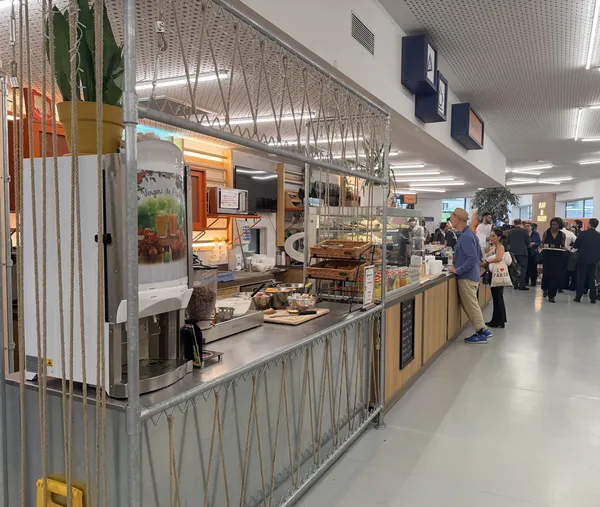
Being anchored in the community is central to its identity. The centre works with local businesses, employs people in situations of precarity, and sources produce locally for its café. As Zrihen explains proudly: “It’s an ecosystem.”
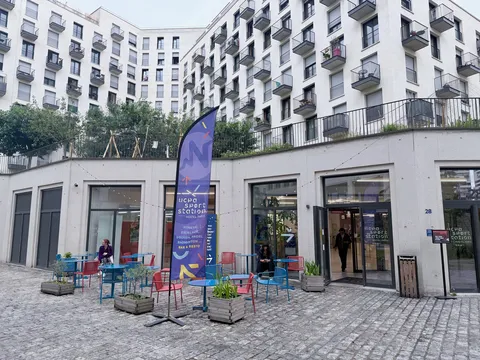
The sports centre and adjoining hostel are run by UCPA (Union nationale des centres sportifs de plein air), an organisation founded in 1965 with a mission to make sport accessible to young people regardless of background.
Since its creation, UCPA has been driven by a social purpose: enabling people to discover sport, broaden their horizons and learn to live together.
Since 2023, the Council of Europe Development Bank (CEB) has supported UCPA through a €37 million loan to finance the rehabilitation, modernisation and development of sports facilities across France.
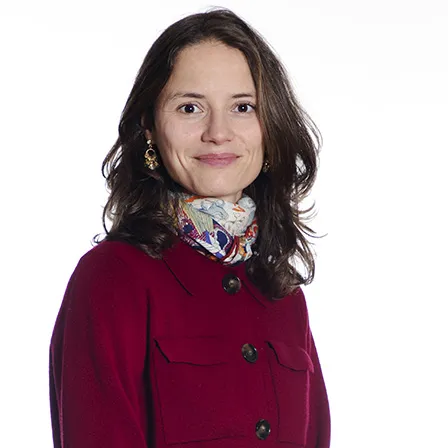
“UCPA centres – such as the one we visited in Paris – are concrete examples of inclusive and mixed spaces, fostering exchange, accessibility and well-being.”
Sport beyond competition
In many European countries – including France – rising isolation, declining physical activity and growing inequalities are prompting policymakers to look at sport through a different lens: not simply that of recreation or competition, but as a tool for social inclusion.
This broader understanding of sport also underpins the European Sports Charter of the Council of Europe, which recognises access to sport and physical activity as a matter of well-being, inclusion and participation in community.
In other words, sport is not simply something people do in their spare time; it is part of how healthier, more cohesive societies are built.
Investing in sport for all
"Investing in sport is something that we, at the CEB, should expand even further in the future because it can help address, if not all, then at least a sizeable share of the challenges we face in France and elsewhere in Europe in terms of social cohesion,” Vice-Governor Gaudin adds.
Yet turning this ambition into reality requires facilities that people can access, programmes that respond to different needs – and long-term investment.
For the CEB, investing in sport means investing in people.
Since 2014, the CEB has approved around €885 million in financing for projects with a sports component across Europe.
These investments have funded gymnasiums, swimming pools, stadiums and multi-sport facilities integrated into educational programmes and wider urban development.
Their common denominator is not the quest for performance, but social impact.
When the crowds go home
Even when the excitement of major sporting events fades, it is places like UCPA Sport centre in Paris that continue to make a tangible and lasting difference.
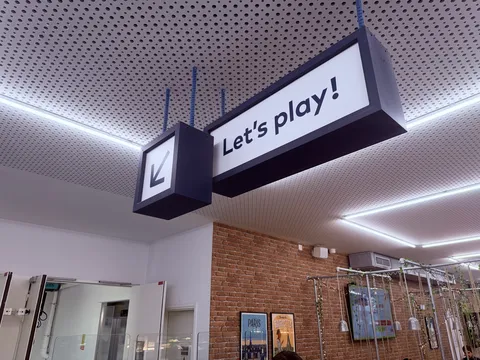
On the day of our visit, the facilities are even busier by the time we leave than when we arrived. This is no coincidence.
The centre welcomes an average of 500 sports participants per day, 35% of whom are under 25, with activities that are diverse and deliberately accessible, discounted prices for young people, and facilities that attract everyone from schoolchildren to office workers and tourists.
Long after the final whistle has blown, the trophies lifted and stadium lights dimmed, sport’s greatest achievement will not be producing new champions, but creating places where people meet, take part, and feel like they belong.