Albania: supporting the modernisation of healthcare
CEB target countries from the former Eastern bloc have undertaken major health reforms over the last two decades to strengthen management and governance and improve efficiency and quality of care. However, in many countries the reforms are not yet fully implemented and investment needs are significant.
 In Albania, successive governments have grappled with the
challenge of modernising healthcare. The main objectives have been to prevent the
deterioration of basic healthcare and to build up a financially sustainable
health system, thereby providing good quality health services and ensuring
efficient management.
In Albania, successive governments have grappled with the
challenge of modernising healthcare. The main objectives have been to prevent the
deterioration of basic healthcare and to build up a financially sustainable
health system, thereby providing good quality health services and ensuring
efficient management.
The state is the major provider of health services, health promotion, prevention, diagnosis and treatments. All Albanian citizens are covered by the public care system.
CEB funding
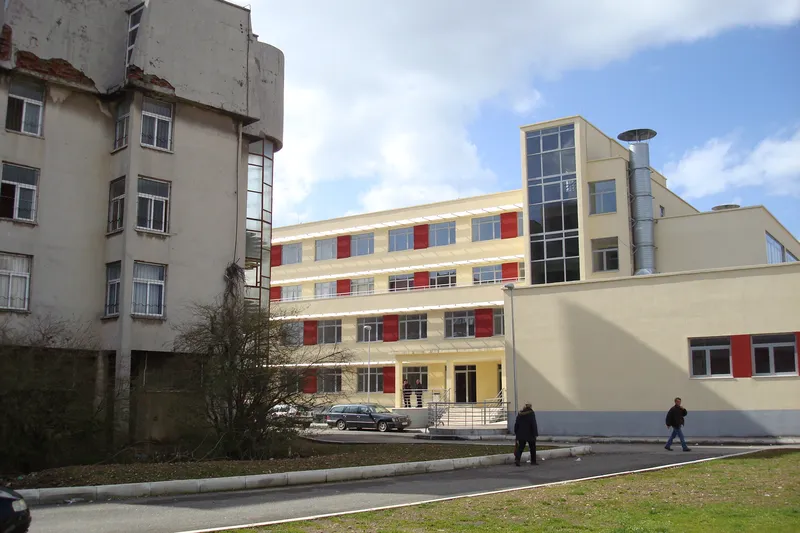
The CEB has collaborated with Albania on the reform of healthcare since 2001, when it approved a loan for the rehabilitation of Shkodra Hospital, based on the master plan elaborated with World Bank financing.
Shkodra hospital provides medical services to about 250,000 inhabitants in the north of the country. The CEB funds, provided in three phases for Shkodra hospital modernisation, have been used for the functional reorganisation of the hospital, with the extension of certain areas to provide improved medical services. One of the most important results so far has been an improvement in prenatal diagnostics and maternity services.
In 2005, the CEB also granted a € 14 million loan for the first phase of the renovation of the Tirana University Hospital, followed by a € 15.9 million loan for the completion of the Hospital Centre’s main building and the refurbishment of the General Medicine building.
Tirana University Hospital (TUHC) is the most important medical facility in Albania, functioning as a hospital centre, a teaching institution and a research centre. It is the largest hospital in the country with a bed capacity of approximately 1,450 beds. More than 65,000 patients are treated there every year.
When the renovation project began, TUHC had an outdated design, with medical specialties such as surgery, pediatrics, neurology and others performed in about 30 buildings, many of them obsolete and far from modern tertiary medicine standards.
Once finalised, the construction and rehabilitation works undertaken will improve access to quality hospital care for the Albanian population and increase the hospital’s capacity.
Technical assistance
The CEB’s added value in the healthcare reform, apart from providing affordable long-term resources to the government of Albania, lies in the technical assistance it provides.
Given the complexities of the healthcare reform, the CEB has been providing substantial support to the Ministry of Health. This has included assistance with project preparation and capacity building at hospital management level, in order to ensure sustainability of the reforms beyond infrastructure building. It is worth noting that, as a result of this collaboration, the authorities have adopted CEB monitoring and procurement rules.
Related publications
-
CEB Info 02/2016
Explore the INFO magazine highlighting the Council of Europe Development Bank's (CEB) activities, particularly as it celebrates its … Published: July 2016 Read -
Financing Sustainable Health Infrastructure in CEB Target Countries
This study assesses the provision and financing of sustainable health infrastructure in Council of Europe Development Bank (CEB) … Published: April 2016 Read