Bridging the gap for Castilla la Mancha
A €150 million European Co-financing Facility (ECF) from the CEB is enabling the Spanish autonomous region of Castilla la Mancha to bridge funding gaps and deliver on a range of priorities, from new jobs and enhanced education facilities to investments in technology and innovation.
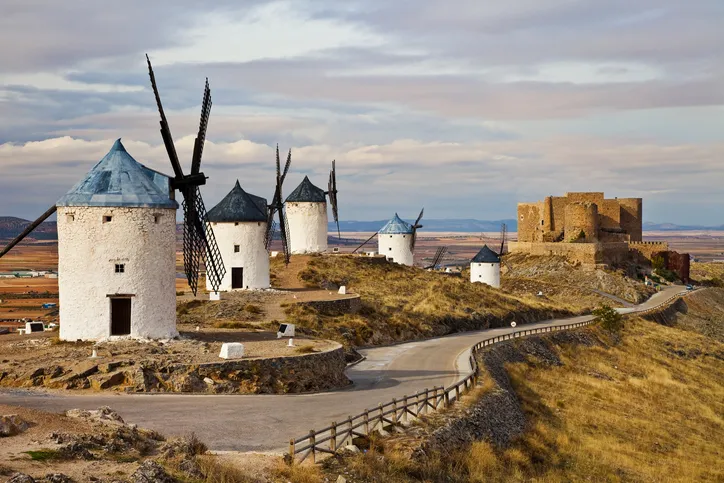 Castilla la Mancha has a population of 2 million and the sixth highest regional unemployment rate in Spain: 16.6% - well above the national average of 14%. The region’s businesses tend to be family businesses and SMEs; 96% have fewer than nine employees. The business network is characterised by low levels of technology and is mainly focused on agriculture and low productivity sectors. What’s more, research and development (R&D) in Castilla la Mancha accounts for only 0.69% of the Spanish GDP, half the Spanish average.
Financing growth
For a developing but sparsely populated region like Castilla la Mancha, accessing funding from the European Structural and Investment Fund (ESIF) – including the European Regional Development Fund (ERDF) – has been a must.
In February 2015 the European Commission approved the ERDF Operational Programme (OP) for Castilla la Mancha. This diagnosed the region’s needs and established six priority funding areas to be covered by the ERDF:
- investments in R&D and innovation
- Information and Communications Technology (ICT)
- competitiveness of small and medium sized enterprises (SMEs)
- low-carbon economy
- protection of the environment
- education.
The Castilla la Mancha Rural Development Programme (RDP) also identified various priorities and applicable measures to achieve the region’s rural development.
Filling the funding gap
Even though these EU funds have been an important source of financing for the region’s 2014-2020 Operational Programmes budget, they have not covered 100% of the costs. There are funding gaps and time lags which Castilla la Mancha has needed to smooth, and which it is doing with support from the CEB.
In order to facilitate the implementation of the different investment activities, and to address Castilla la Mancha’s contribution, the CEB is providing a European Co-financing Facility (ECF) up to €150 million.
This will enable the region’s population to benefit from new jobs, new technologies, improved education facilities and better environmental conditions.
The ECF will help Castilla la Mancha to maximise the benefits of the EU funds. It will help to boost sustainable and inclusive economic growth by partially financing research, development and innovation projects, energy efficiency and investments in renewable energies, as well as supporting SMEs and the environment.
The ECF will partially finance activities under the above mentioned Programmes such as:
- improvement of the equipment and facilities of the science and technology parks in Guadalajara and Albacete which promote business innovation by offering offices for rent, training, and business incubation services;
- development of a tele-assistance service for patients with chronic illnesses;
- installation of solar panels on public buildings and the replacement of the public vehicle fleet with less polluting vehicles;
- construction of a new university campus in Guadalajara and construction/refurbishment of the medicine, pharmacy and architecture faculties;
- upgrading of irrigation systems to allow better water resource management; support prevention of forest fires;
- construction of the Cantalojas visitor centre in Guadalajara’s Sierra Norte Natural Park to develop the region’s natural heritage.
Beyond the Castilla la Mancha region, the ECF will also support Spain to achieve Europe 2020 targets in employment, R&D, climate change and energy, education and social exclusion.
Commenting on the impact of the ECF, Maria Sigüenza, CEB Country Manager for Spain, says, “The European Co-financing Facility was approved in March 2019 and is helping to boost sustainable and inclusive economic development in Castilla la Mancha. The people of this historic region will benefit from a better quality of life thanks to new investment in a diverse and exciting range of priority areas.”