CEB’s 15 years of partnership with the Western Balkans Investment Framework
Launched 15 years ago with the CEB as a founding-member, WBIF provides financing and technical assistance to strategic projects in the energy, environment, social, transport, and digital infrastructure sectors, in alignment with the region's shared strategic objective of integration with the European Union.
“We definitely have better living conditions,” stated Adelisa Salkić when asked about her new home in Kladanj, Bosnia and Herzegovina. “I have also received further education and finally employment.”
Adelisa is among the one million people displaced within the borders of Bosnia and Herzegovina following the 1990s conflicts in the former Yugoslavia. More than two decades after the war several thousands of people still lived in collective centres and alternative temporary accommodation. Many of those were unemployed, elderly, ill, or otherwise socially vulnerable.
Through the Western Balkans Investment Framework’s (WBIF) and in collaboration with the Government of Bosnia and Herzegovina, the Council of Europe Development Bank (CEB) suppported a €60 million loan for the construction and rehabilitation of housing units for the refugees and internally displaced persons, like Adelisa, still living in precarious conditions. The individual and community level impacts of social housing initiatives, such as the one in Kladanj, are transformative, and the partnership’s investment projects in key infrastructure are equally powerful.
The WBIF is a blended finance facility that brings together the European Union, the CEB, the European Bank for Reconstruction and Development (EBRD), the European Investment Bank (EIB), the World Bank Group, KfW, Agence Française de Développement (AFD) and several bilateral donors. Launched 15 years ago with the CEB as a founding-member, WBIF provides financing and technical assistance to strategic projects in the energy, environment, social, transport, and digital infrastructure sectors, in alignment with the countries’ shared strategic objective of integration with the European Union.
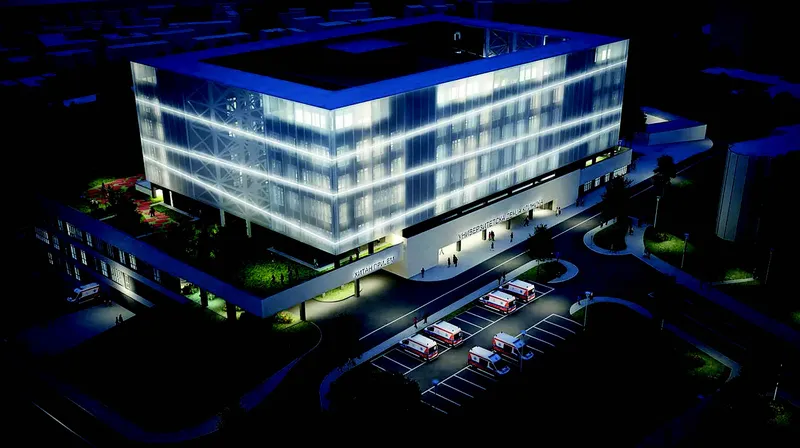
Through grants, WBIF is also able to make lending more accessible for social projects, such as a flagship paediatric hospital in Serbia. University Children's Clinic (UCC) Tiršova in Belgrade admits around 14,000 patients and performs some 6,000 surgeries per year. In 2023, WBIF and the CEB received a €35 million EU grant for the construction of a new children’s hospital, which was complemented by a CEB loan of €54 million and a contribution of €73.6 million from the Government of Serbia. Thanks to this initiative, patient capacity at UCC will be increased by 30% - treating an extra 3,700 patients per year. Known as Tiršova 2, the new hospital will begin welcoming patients from Serbia and the wider Western Balkans region in 2026.
Over the past 15 years, CEB projects have benefited from €143 million in WBIF grants (EU and bilateral donors) for 22 projects - 18 of which have accessed €518 million in CEB loans. Four projects with loans totalling €71 million are currently being implemented in Albania, Kosovo and Serbia, with projects valued at over €450 million in the pipeline.
Working with the WBIF has been invaluable for the CEB’s own operations. It has not only meant increasing the scale and scope of the Bank’s support to its member countries in the Western Balkans but also reinforcing its relationship with the EU.
As the region moves further into the Economic and Investment Plan for the Western Balkans 2021-2027 and starts with theReform and Growth Plans, which explicitly refer to the social dimensions of the region’s economic recovery and integration process, the CEB is committed to continuing this vital engagement. By addressing the region’s most pressing social infrastructure needs the CEB’s partnership with WBIF helps ensure that the European future for the region becomes reality.