Cleaning up water in Spain
Castilla y León is the largest region in Spain and one of the largest in Europe, famous for its historical and natural heritage. More than half of the region's landmass – covering around a fifth of the nation – is arable land. Agriculture has traditionally been one of the major economic activities in the area, earning it the title of “the granary of Spain.”
 However, the region faces several environmental
challenges, notably concerning water supplies and wastewater treatment capacity.
Due to farming, the underground waters are often contaminated with nitrates and
other substances and some of the areas are threatened by desertification.
However, the region faces several environmental
challenges, notably concerning water supplies and wastewater treatment capacity.
Due to farming, the underground waters are often contaminated with nitrates and
other substances and some of the areas are threatened by desertification.
Since 2011, the CEB has been collaborating with SOMACYL, Castilla y León’s public utility company to partially finance investments in water and wastewater treatment - first, through a € 100 million loan and, more recently, with the approval of a € 50 million loan in 2014.
The two CEB loans also comprise energy (biomass), fire prevention and energy efficiency components.
Castilla y León’s Strategy for Sustainable Development lists priority activities to ensure high quality water for human consumption as well as to improve urban waste water treatment and control its negative environmental impact.
The CEB’s funding is boosting the wastewater treatment capacity in the region.
The main objective is to bring wastewater facilities in the selected municipalities to the levels required by the relevant EU directives, as well as to address public health and environmental threats. According to the EU legislation, municipalities with more than 2 000 inhabitants are obliged to properly treat their wastewaters before dumping them into the receiving environment.
Viana de Cega, a village in the outskirts of
Valladolid, is one such municipality. It regularly sees its population triple
in the summer months, yet it had no water treatment facilities. With the CEB’s
loan approved in 2011, SOMACYL built a waste water treatment plant that can
service 10 000 people, thus making it possible to cover the needs of Viana de Cega
and its seasonal peaks, as well as those of a neighboring village.
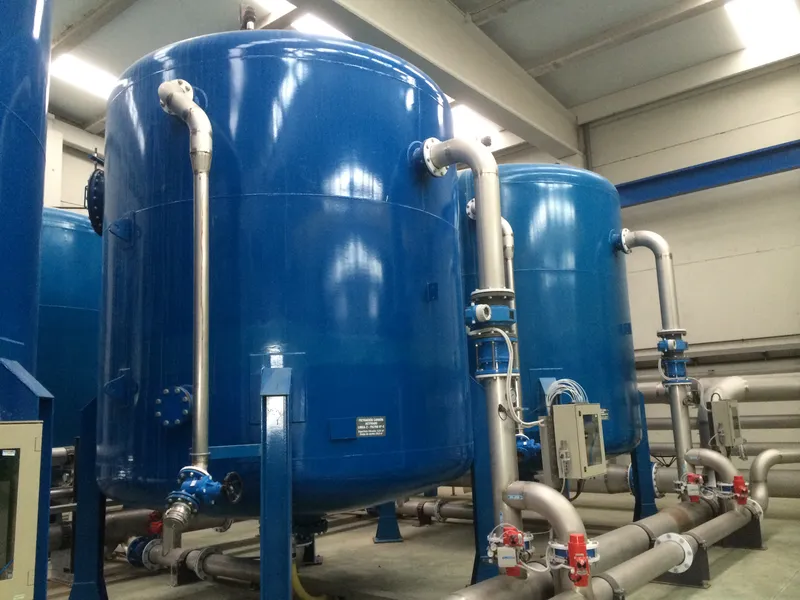
Building water supply from the river Duero for a group of 35 villages was also one of the largest sub-projects financed by the CEB. These villages used to extract ground water and treat it with chlorine to make it potable. However, the reduction in ground water levels resulted in the arsenic passing into the water, making it unsuitable for drinking. Tordesillas, a town of more than 9 000 inhabitants, had its water delivered in water tanks during the summer months.
The water supply system constructed by SOMACYL and funded by the CEB now brings potable water to 50 000 people.
Ultimately, the CEB’s continued investments are expected to deliver substantial environmental quality improvements, reduce public health risks and improve the living conditions of Castilla y León’s population.