Diagnosing success for a pioneering company
As we mark the MSME Day on 27 June, we look at how the CEB is helping an innovative business in Hungary to become a big player on the global stage.
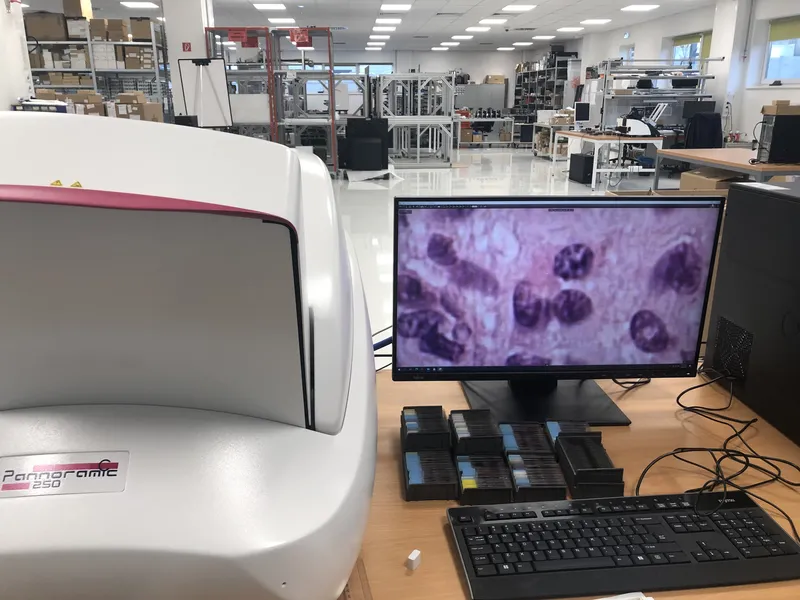 3DHISTECH was
established in Hungary in 1991 from one man’s vision to enhance disease
diagnosis and treatment. Bela Molnar was a research doctor at Semmelweis
University in Budapest at the time. He saw the potential of digital pathology
technologies to enhance the quality and speed of disease diagnosis, and
therefore healing.
3DHISTECH was
established in Hungary in 1991 from one man’s vision to enhance disease
diagnosis and treatment. Bela Molnar was a research doctor at Semmelweis
University in Budapest at the time. He saw the potential of digital pathology
technologies to enhance the quality and speed of disease diagnosis, and
therefore healing.
Dr. Molnar’s company, 3DHISTECH, is a pioneer in digital pathology. It develops and manufactures digital slide scanners, as well as software applications for digital slides, plus tissue microarray machinery. As well as supporting routine human pathology and medical and pharmaceutical research, the technology has applications in medical education, veterinary pathology and even geology.
By the time the pandemic broke out in 2020, 3DHISTECH had become a multi-award winning MSME, and a big exporter – 95% of its annual turnover comes from exports. It sells some 300 digital pathology systems annually to cancer research, diagnostic and treatment centres worldwide and has a global market share of 37%. Its competitors are large multinational companies.
Helping a pioneer to flourish
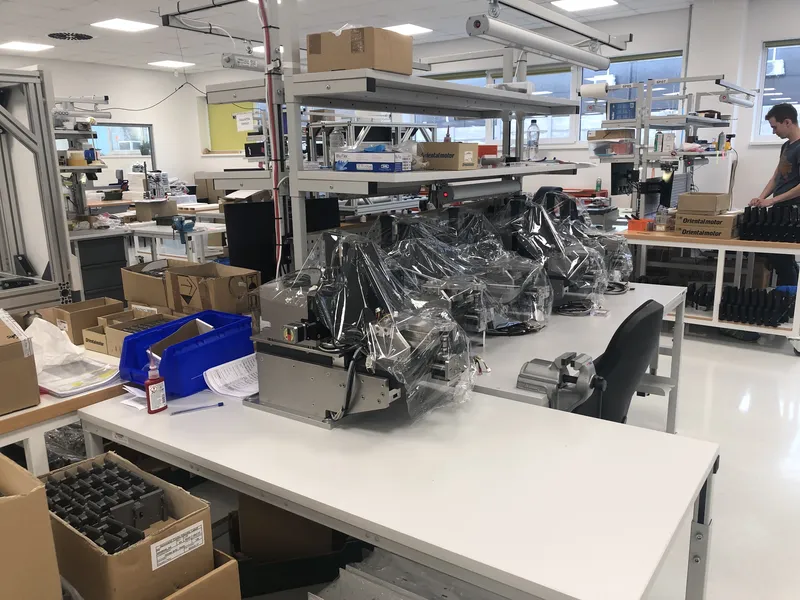 When the pandemic
began in 2020, 3DHISTECH started to experience delays with some outsourced
production, so the company decided to fast-track its development plans to
create a new integrated production facility next to its existing facility. The
investment started in early 2020 and was completed in March 2021, and was
co-financed by the CEB.
When the pandemic
began in 2020, 3DHISTECH started to experience delays with some outsourced
production, so the company decided to fast-track its development plans to
create a new integrated production facility next to its existing facility. The
investment started in early 2020 and was completed in March 2021, and was
co-financed by the CEB.
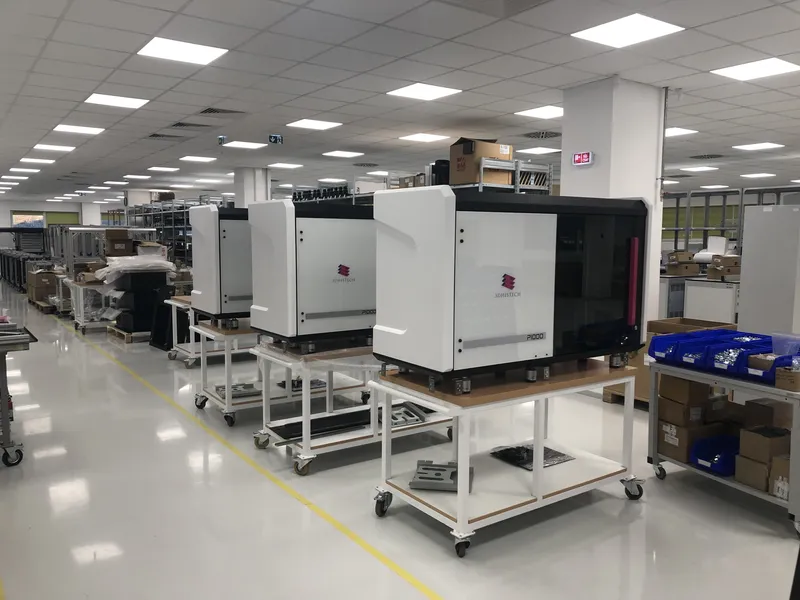
In the nine months following the completion of the new production facility, the company’s business volume had increased by nearly a third and some 40 new jobs had been created.
Today 3DHISTECH has 240 full time employees and a projected turnover of €30 million for 2022. This is a 50% increase on its pre-pandemic turnover and possible thanks to CEB investment.
Support for MSMEs that export
 The funds that 3DHISTECH accessed to build its new facility came from a €50 million loan made by the CEB to the Hungarian Export-Import Bank Plc (Eximbank)
in January 2020. The funds were disbursed through intermediary financial
institutions within Eximbank’s Export Credit Programme – an initiative that
finances the investment and working capital needs of MSMEs.
The funds that 3DHISTECH accessed to build its new facility came from a €50 million loan made by the CEB to the Hungarian Export-Import Bank Plc (Eximbank)
in January 2020. The funds were disbursed through intermediary financial
institutions within Eximbank’s Export Credit Programme – an initiative that
finances the investment and working capital needs of MSMEs.
Eximbank is a state-owned body that promotes Hungarian exports and export-related investments, and improves the competitiveness of Hungarian corporations. The Hungarian economy is mainly export-oriented, and around 70% of the country’s workforce is employed by MSMEs, so supporting MSMEs that export is a priority for Eximbank. These businesses often cannot access capital markets because they usually are of smaller scale, so the long-term funding schemes offered by Eximbank are of great importance to them.
An eight-year partnership
The CEB has been partnering with Eximbank to support MSMEs since 2014 when the Bank approved a €50 million loan to partially finance investment sub-projects supporting MSMEs in the export and service sectors. The Bank’s latest loan has enabled MSMEs to expand capacity and grow their turnover, leading to a significant number of jobs being created. The funds have also helped to reduce the negative impact on MSMEs caused by the COVID-19 pandemic.
“The CEB is proud to have the possibility to support promotional banks such as Eximbank in Hungary,” says Csaba Palicsko, the CEB’s Country Manager for Hungary. “Eximbank supports the economy and helps create jobs within MSMEs across the country. Following two operations with them, we are in dialogue with Eximbank regarding a new loan which could further support and enhance the competitiveness of MSMEs in Hungary.”
COVID-19 and MSMEs
The COVID-19 pandemic has amplified the pre-existing regional economic disparities and socio-economic inequalities across Europe, particularly in underserved rural areas. Accordingly, in 2021 the CEB focused on loans that facilitate access to financial services for people who have struggled to secure funding for their operations, namely micro-enterprises, including start-ups, women entrepreneurs and smallholders.
Although they are key to generating economic growth, small businesses often face credit constraints and disproportionate barriers to finance, compared with bigger companies. By providing them with financial support, the CEB is helping its member states to maintain and create viable jobs, which is essential in both the context of COVID-19 crisis, as well as for long-term recovery.
A significant sector
MSMEs are one of the CEB’s ten sectors of focus, and the sector that has received more of the Bank’s funding than any other. In the last decade, 26.3% - or €9.5bn - of all CEB loans approved have been to support MSMEs. Since the Bank’s inception in 1956, loans supporting MSMEs have amounted to €17.8bn.
“Beyond accounting for a significant part of overall employment and across all countries worldwide, MSMEs are also known to be the engines of economic growth and social development and play a key role in promoting social cohesion and inclusion in local and broader communities,” says Merve Akinci, Technical Advisor at the CEB.
“The CEB provides long-term and affordable loans to finance investment and working capital needs of MSMEs through its intermediary financial institutions. By doing so, the CEB contributes to improving MSMEs’ access to finance, which is critical for them to meet financial needs and grow.”