From seed to bloom: the story of Iuliana Vedi
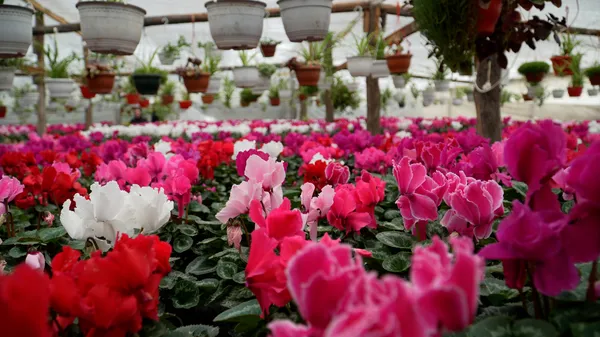
n the village of Matca, in eastern Romania, rows of vibrant flowers stretch beneath the curved roofs of greenhouses. Even on grey mornings, the space bursts with colour – pinks, reds and yellows carefully arranged in neat lines, ready to be delivered to towns and cities across the country.
In the village of Matca, in eastern Romania, rows of vibrant flowers stretch beneath the curved roofs of greenhouses. Even on grey mornings, the space bursts with colour – pinks, reds and yellows carefully arranged in neat lines, ready to be delivered to towns and cities across the country.
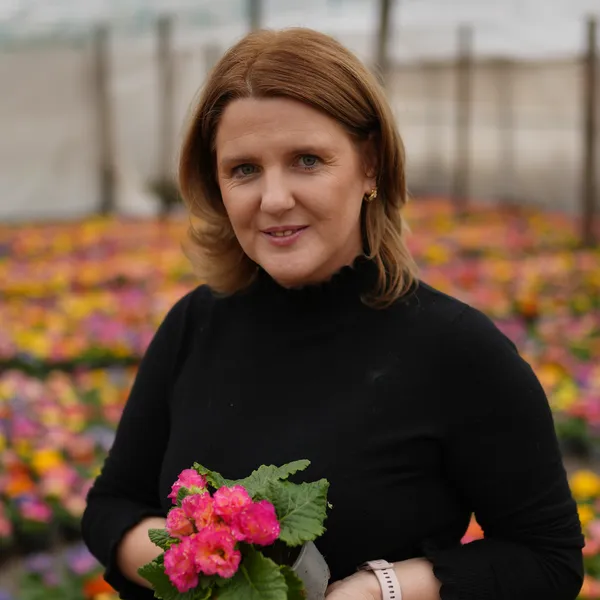
For Iuliana Vedi, these greenhouses represent far more than a business. They are the result of years of persistence, learning, and long hours – often late into the night after a full day in the hospital. A mother of three, a medical assistant and now a horticulture student, Iuliana balances multiple roles while leading the Vedi family’s growing horticulture business.
It all started in 2014, before Iuliana and her husband exchanged vows, they took out their first loan together to start a small vegetable business. The venture did not quite work out.
Today, the Vedi family greenhouse produces flowers and ornamental plants that reach clients across Romania, including municipalities and local partners that use them to brighten public spaces. But this transition required patience – and investment.
A business built in layers
The Vedi family’s journey has been closely linked to their long-standing relationship with Patria Credit, a Romanian microfinance institution that specializes in supporting rural entrepreneurs.
"For us, Patria Credit was like our parents," Iuliana says. "It was the impulse, that step that pushes you forward."
The relationship goes back over twelve years, with Iuliana taking out more than ten loans during that period. That number tells its own story: not one big break, but a series of small, deliberate investments that compounded over time.
One of those moments stands out. The heating system for the greenhouse was arriving – a truck was already on its way – and Iuliana was short on funds. She had a week, at most. She called her loan officer, George. "He did the impossible," she recalls. The loan came through in four days.
Why rural women — and why it matters
According to Raluca Andreica, CEO of Patria Credit, supporting rural entrepreneurs means building long-term partnerships.
“Apart from financing, we usually advise – through our colleagues –on how to finance or how to increase the business, on cash flow and local opportunities. We intermediate exchange between our clients from the local communities. It is a long-term commitment.”
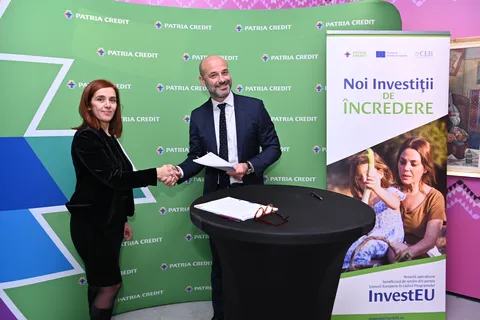
Raluca Andreica has spent her career in microfinance in Romania, a country with the highest number of very small farms in Europe – over one million. It is also a country where, for many women in rural areas, starting a business is less a choice than a necessity.
"For many women rural entrepreneurs, it came rather through courage than opportunity," she says. "What they may lack in capital, they compensate with determination, creativity and deep commitment to their communities."
The CEB finances institutions like Patria Credit precisely to extend credit where traditional banks don't reach. In Romania, where 28% of Patria Credit's clients are unbanked, that gap is real.
“Agriculture is very fragmented in Romania, with most farmers cultivating small pieces of land (less than five hectares) and the lack of trust in the traditional banking system, it’s very hard for them to grow their businesses,” says Wassila Dridi, CEB Country Manager for Romania.

To understand whether that financing was making a difference, the CEB, through the InvestEU Advisory Hub, supported Patria Credit in developing a comprehensive social impact study of its microfinance activities.
The findings were clear: nearly half of clients reported profit increases, 96% had invested in their businesses over the past three years, and women, though only 24% of business owners in the client base, are involved in managing 88% of the businesses financed.
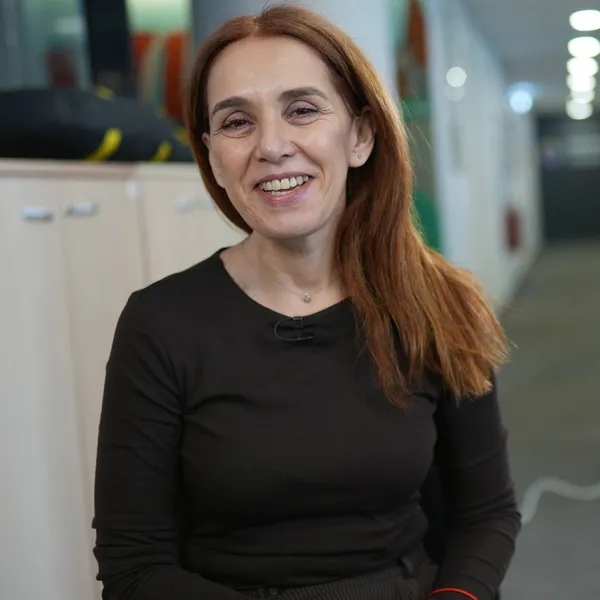
The study also shows that supporting women entrepreneurs generates wider benefits that extend beyond the business itself.
“When we support women entrepreneurs, impact is multiplying much quicker, “says Andreica. “Our social impact findings show that women reinvest more in education, in health, in household stability. Long-term support builds confidence, stability, and intergenerational change.”
What a day looks like
Iuliana's description of a typical day is delivered without complaint, but it lands like a list of everything a hectic day can possibly entail.
First, the children. Then work at the clinic. Then the greenhouse, where she stays until midnight. Her husband installed lights so she could keep going after dark. On Saturdays, she travels for university – a distance-learning programme in horticulture she enrolled in this year, because she wanted, as she says, "a higher level of expertise."
She calls this combination of business and passion "pleasure." Asked how she manages it all, her answer is short: "I'm strong."

What growth means
When asked whether she hopes her children will one day work with flowers, Iuliana says yes, at least for one of them. She takes them to university with her sometimes, just to show them that horticulture is beautiful.
"I went from being a medical assistant to a horticulturist," she says, noting that people are often surprised. The difference, she jokes, is that as a medical assistant you stay clean. “Here, your hands are dirty all the time.”
She doesn't seem to mind.
"It is a hard job," she says, "but it is beautiful.”

This operation benefits from support from the European Union under the InvestEU Fund.