Increasing energy efficiency, one panel building at the time
Thanks to the CEB financing, the retrofitting of panel buildings in the Slovak Republic will see the residents’ energy bills slashed by 30-60%.
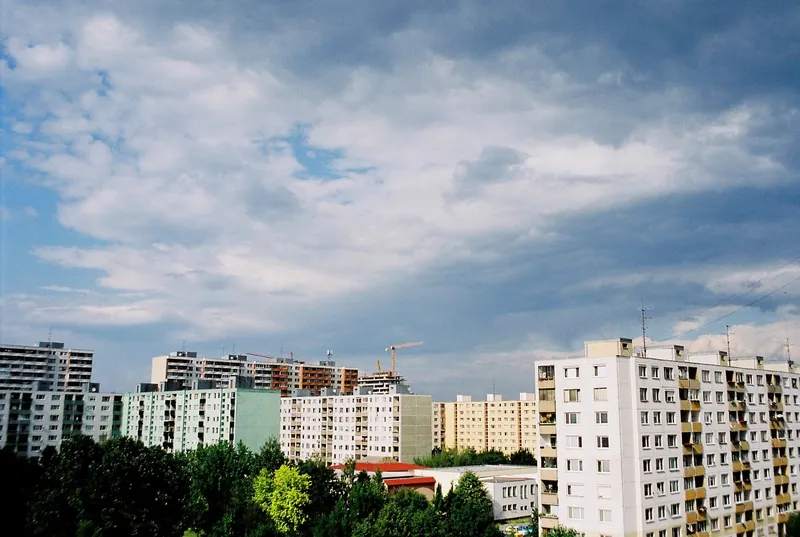 From
Bratislava to Bucharest, the ubiquitous panel buildings dot the urban
landscapes of most cities and towns of the former Eastern bloc. Constructed
quickly and with prefabricated materials to respond to the housing demand of
rapidly growing urban populations, these buildings now account for a lion’s
share of energy consumption.
From
Bratislava to Bucharest, the ubiquitous panel buildings dot the urban
landscapes of most cities and towns of the former Eastern bloc. Constructed
quickly and with prefabricated materials to respond to the housing demand of
rapidly growing urban populations, these buildings now account for a lion’s
share of energy consumption.
The Slovak Republic is no exception. More than 700 000 apartments (out of the total housing stock of two million) have been built in panel buildings from year 1955 to 1990. Essential investments in the maintenance of the buildings were often omitted after the privatisation, due to lack of experience, insufficient legal regulations and moderate incomes.
As a result of poor insulation and often inappropriate heating methods, these buildings consume too much energy and impose high living costs on the residents. Typical problems include overheating in summer months, under-heated apartments on the north or windy side of the blocks, mould formation, etc. The apartments have a lower life expectancy and are of inferior quality compared to the rest of the housing stock.
Nowadays, mainly lower, working and middle class people live in panel buildings throughout the country. Increasing energy costs combined with poor energy performance of the existing building stock have led to the most vulnerable social groups being unable to heat their households. Energy costs per household in the Slovak Republic account for 16.9% of their net monthly income, a quarter higher than in Western European countries.
With a € 30 million loan to Slovenska Sporitelna a.s. (SLSP), the CEB is investing in the reduction of energy consumption to ameliorate the living conditions of families residing in panel buildings.
The funded project will provide needed long-term resources to finance small, energy saving projects undertaken by condominiums. The energy savings will be achieved by investing in insulation and other retrofitting works on panel buildings and old brick multi apartment houses. Typical works involved the insulation of walls, roofs, floors, and balconies; replacement of windows (double/triple glazed); installation of efficient boilers, heat exchangers, radiators and meters.
Thanks to these investments and even in spite of rising trend in energy prices, residents will see their energy bills and consumption per flat significantly decreased. Based on the data from SlovSEFF, a sustainable energy financing facility, a family’s average annual heating bill should decrease by 30-60% per year. SLSP estimates that about 200 condominiums will benefit from CEB Project over the three-year implementation period, with an average loan of € 150 000 per sub-project.
The life expectancy of these panel buildings is estimated to be approximately 80 years, depending on the weather conditions and maintenance. However, by retrofitting these buildings their life can be considerably prolonged. Another positive effect of thermal insulation of facades is creating healthier conditions in the apartments (elimination of mould formation on the inner side of walls due to increase of temperature of the external walls and thus elimination of internal condensation).
***
Photo by Flickr user asebest.