Innovating to save lives: the value of entrepreneurship
To mark Micro, Small and Medium-sized Enterprises (MSMEs) Day 2024, we spotlight the story of DOK-ING, a globally recognised Croatian company whose innovative robotic systems is used in emergency response and post-conflict recovery.
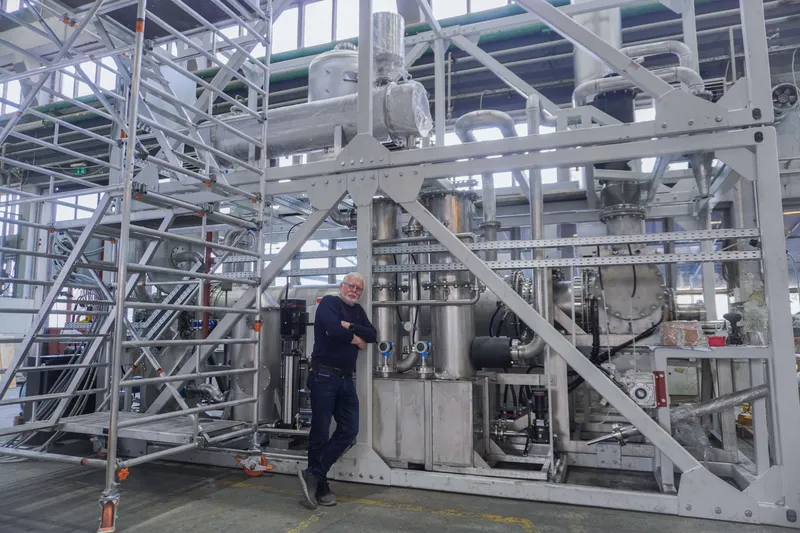
The story of DOK-ING
Founded in 1991 by Croatian engineer Vjekoslav Majetić in his garage, DOK-ING began with the vision of creating remote-controlled machines to protect people from the dangers of demining activities following the violent break-up of former Yugoslavia. Over the years, it has evolved from a one-man startup into a global leader in engineering advanced technology for crisis situations, disaster response and renewable energy projects.
Despite the company's significant growth, Majetić emphasises that its mission of “safeguarding human lives, the environment when they are in danger or threatened” remains unchanged.
Rapid growth and social impact
DOK-ING’s rapid growth is a testament to its innovative capabilities and the entrepreneurial spirit of its owner. From 2021 to 2023, the company’s workforce expanded from 145 to 250 employees, marking its transition from an MSME to a major industry player.
Headquartered in Zagreb, Croatia, the company exports its products to over 40 countries, with one of its primary markets currently being Ukraine.
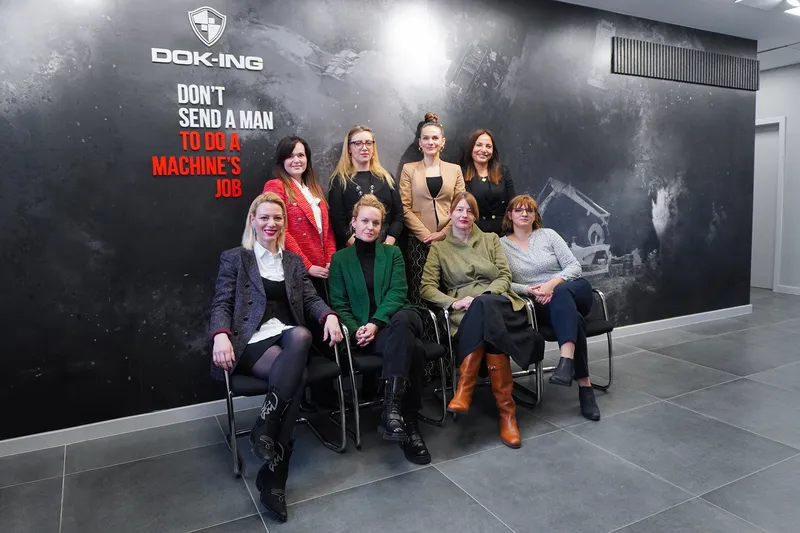
Robotics for recovery in Ukraine
Recently, the deployment of DOK-ING’s de-mining robotic systems in Ukraine has demonstrated the critical role MSMEs, and their innovations, play in responding to crises.
In May 2024, the EU provided Ukraine with three of DOK-ING’s MV-10 mine-clearing robotic systems as part of a €25 million humanitarian demining support package. These systems will be crucial in “enabling the safe return of civilians and the revival of economic activities, particularly in transportation, commerce and agriculture,” notes Majetić. Demining is essential in “paving the way for a renewed sense of safety and prosperity, fostering growth and stability in affected regions.”
Ukrainian Deputy Prime Minister Yulia Svyrydenko endorsed the MV-10 machines in June 2024, noting that an increasing percentage of the machines’ parts is built and assembled in Ukraine, in collaboration with DOK-ING. This is example of cooperation between domestic and foreign manufacturers, which allows the creation of additional job opportunities, to support the country’s recovery, Svyrydenko noted.
Collaboration to support MSMEs
DOK-ING’s contributions have been important also on the sustainability front. In 2022, the CEB supported the upgrading of a DOK-ING photovoltaic power plant’s heating and cooling system through a €200 million loan to the Croatian Bank for Reconstruction and Development (HBOR).
The project is expected to produce energy savings for the grid in the range of 1.2 million kWh, with about 350 tons of CO2 emissions reduction per year, exemplifying the company’s contributions to sustainability. Over the last two years, DOK-ING has also focused on developing a system to convert non-recyclable waste into clean energy.
Reflecting the long-standing relationships between the CEB and HBOR, the Bank approved a €250 million loan in June 2024 to support HBOR in strengthening job creation and bolstering MSME competitiveness across Croatia. This 10th CEB loan to HBOR underscores both institutions’ shared commitment to supporting MSMEs and innovation, and maintaining strong partnerships in doing so.
“We are particularly proud that 20 percent of the loan intended for MSMEs is targeted at enterprises in the economically less developed regions of Croatia, thereby directly contributing to the reduction of regional disparities and the creation of sustainable communities,” notes Hrvoje Čuvalo, President of the HBOR Management Board.
“Since our collaboration with the CEB began in 2001, over 1,500 projects by MSMEs and more than 200 local government projects have been supported in Croatia,” he adds.
“The loans channeled to Croatian MSMEs via the long-lasting CEB-HBOR collaboration have enabled the beneficiaries to undertake investments to increase capacity, modernisation, innovation and energy efficiency, thus helping companies to scale up, become more competitive as well as resilient to external shocks while providing employment opportunities”, explains Merve Akinci, CEB Senior Technical Advisor.
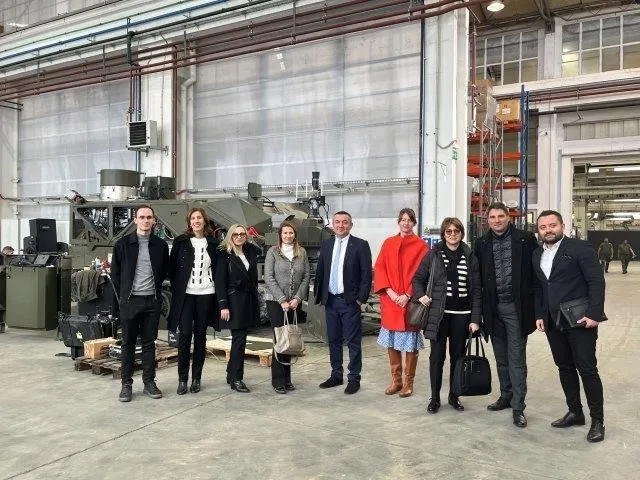
MSMEs: A CEB priority
MSME financing is a key sector for the CEB. In 2023, the Bank financed over €200 million in loans to boost microfinance in six countries and provided €580 million to improve access to credit for MSMEs in four countries.
With its positive social and environmental impacts, DOK-ING encapsulates why the CEB is committed to supporting MSMEs and investing in entrepreneurship and innovation.
“A growing and connected small business can help deliver financial inclusion for an entire community. When an MSME grows, everyone connected to it grows as well,” underlines Makedonka Mateska, CEB Country Manager for Croatia.
DOK-ING demonstrates the power of innovation not just in enabling economic and social development, but also in saving lives from natural and man-made hazards. As Mateska notes, this is what makes DOK-ING “an entrepreneurship story nothing short of inspiring, that makes us proud at the CEB.”