Investing in water resilience from the ground up
As Europe battles severe drought, one thing is becoming increasingly clear: water is too precious to be taken for granted.
Climate change is not only bringing longer dry spells. It is also intensifying rainfall, placing growing pressure on ageing water infrastructure across the continent.
Building resilience means managing water better, from protecting scarce resources to ensuring wastewater can be safely collected and treated when storms hit.
Yet some of the most critical infrastructure underpinning resilience remains largely invisible. Wastewater treatment plants rarely attract public attention, but they play an essential role in everyday life.
By safely treating wastewater before it returns to rivers and the natural environment, they help prevent pollution, protect biodiversity and reduce risks to public health.
Reliable sanitation is also a cornerstone of resilient, inclusive communities, protecting public health, supporting economic activity and helping ensure that all residents, especially the most vulnerable, can live in a cleaner, safer environment.
When climate change deepens social vulnerability
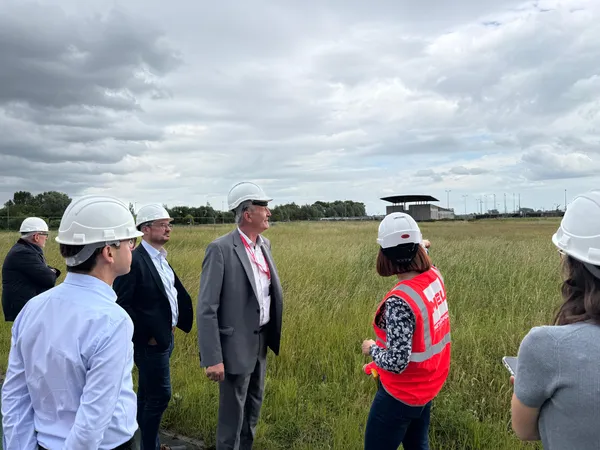
These benefits are particularly important in Hauts-de-France, the northernmost region of France, an area where environmental challenges intersect with significant socio-economic vulnerabilities.
Shaped by a long industrial history, the region continues to face the legacy of intensive industrial activity, while also recording high levels of poverty and unemployment. Today, it is recognised as one of France’s Just Transition territories, where the environmental challenges of past industrial activity intersect with persistent socio-economic vulnerabilities, making investment in sustainable and inclusive infrastructure particularly important.
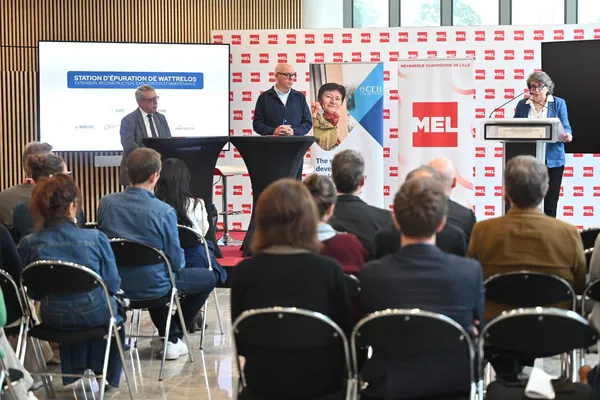
Against this backdrop, in 2025 the CEB has approved a €107 million loan to the Métropole Européenne de Lille to modernise and expand the Wattrelos wastewater treatment plant. The loan forms part of a broader €214 million investment programme aimed at preparing the metropolitan area's water infrastructure for a warmer, drier and more climate-volatile future.
Serving nearly 275 000 people across Roubaix, one of the largest urban centres within the Métropole, the plant was built in the 1980s and only partially upgraded two decades ago. Today, it faces pressures that its original designers could scarcely have anticipated.
In Lille, the CEB is supporting the modernisation of the Wattrelos wastewater treatment plant to improve access to essential services for nearly 275 000 people.
Climate change is bringing more frequent and more intense rainfall, increasing the volume of water entering the network during storms. At the same time, the metropolitan area continues to grow, placing additional demands on ageing infrastructure. Without sufficient treatment capacity, heavy rainfall can overwhelm the system, leading to discharges of untreated wastewater into the Espierre River.
The consequences extend beyond the immediate area.
The Espierre is a tributary of the Scheldt (Escaut, in French), a river that flows through France, Belgium and the Netherlands. Improving its water quality is therefore not only a local priority but a shared cross-border responsibility.
The modernised facility will significantly increase treatment capacity, improve energy efficiency through innovative processes and reduce greenhouse gas emissions. It will also help the metropolitan area comply with European wastewater requirements.
At the same time, cleaner waterways will benefit local communities, agriculture and biodiversity, contributing to a healthier environment for generations to come.
Financing in water resilience: key figures
- 20% increase in the treatment plant’s capacity
- Production of over 2 GWh/year of renewable electricity for self-consumption and 11 GWh/year of biogas for reinjection
- Recovery of over 15 GWh/year of heat
- Dried sludge recoverable for energy production amounting to 14 GWh/year
Investing in healthier communities
For the CEB and the Métropole Européenne de Lille, investments like this one extend beyond infrastructure. They are about safeguarding health, protecting the environment and making fundamental rights a reality for communities.
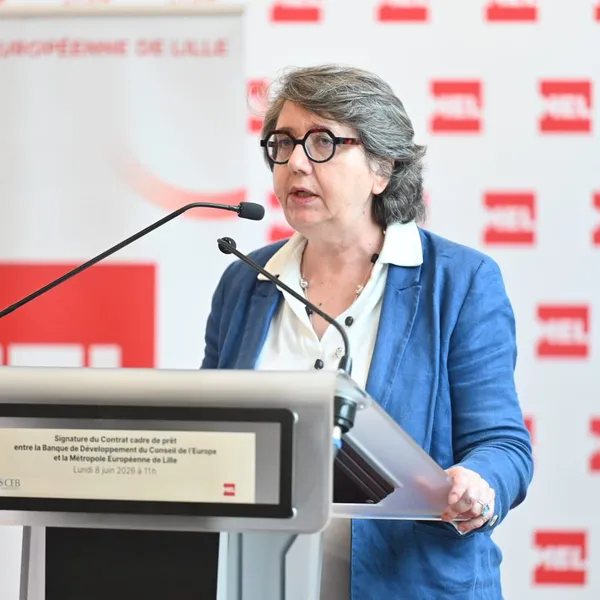
The project also supports the Métropole Européenne de Lille’s long-term strategy to provide reliable and affordable public services, while improving environmental performance and reducing operating costs through greater energy efficiency.
In 2024, the Métropole became the first local authority in Europe to introduce a social water tariff through its new public service concession. The scheme is designed to make sure that no low-income household spends more than 3% of its income on water bills, provided water is used responsibly.
A broader commitment to water security
Across much of Europe, ageing water infrastructure is coming under increasing pressure from climate change, requiring sustained investment to protect both people and the environment.
That vision is reflected in the CEB’s decision to join “Water Forward”, a global initiative to accelerate investment in water security that was announced during the 2026 World Bank and IMF Spring Meetings. The CEB committed to improving water security for at least three million people by 2030.

Over the past decade, the Bank has invested more than €1 billion in water supply and sanitation projects across Europe, financing around fifteen operations that improve access to clean water, strengthen wastewater treatment and increase resilience to floods and other climate-related risks.
While these projects take different forms, they share a common objective: ensuring that essential services remain reliable, accessible and resilient in the face of growing climate risks.