Marseille: Modernising education to bridge social divide
Backed by €200 million in CEB financing, France’s second largest city is transforming its schools to tackle inequalities.
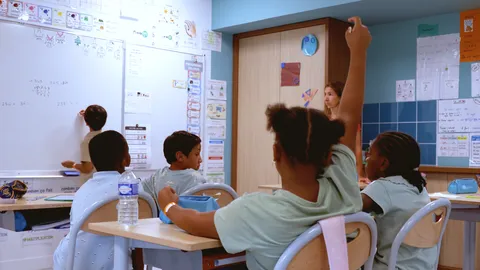
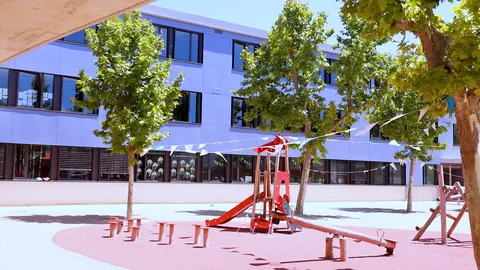
On a Thursday morning in northern Marseille, children pour through the gates of Bouge primary school, disappearing into bright classrooms and colourful spaces designed to learn, play and explore. In the courtyard dotted with trees and plants, a beautiful new slide delights the children and amuses the grown-ups.
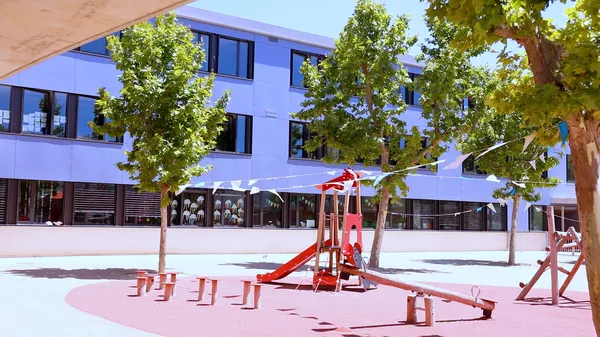
For the pupils starting their school day, this simply feels like school should: colourful, welcoming and fit for learning. Just two years ago, it couldn’t have been more different.
“There was asbestos. The gymnasium was collapsing, so it was closed. There were holes in the floor, electrical wires hanging down, cracked walls,” recalls the school’s former headteacher Magali Valdez.
The building had become a catalogue of everything a school should not be. Water leaked through the roof, windows let in wind and rain, toilets regularly malfunctioned, while cockroaches, bedbugs and even rats had become part of daily life.
In winter, teachers and pupils often stayed in class wearing coats and gloves as temperatures dropped close to 10°C. In summer, the temperature in the classrooms could reach 35°C.
“We were one of the five worst schools in the département,” says Magali Valdez. “But you adapt to everything. And the children don’t realise the conditions they’re actually in.”
A city confronting deep inequalities
Bouge primary school was far from an isolated case, but rather a reflection of a wider problem.
Across Marseille, decades of chronic underinvestment have left much of the city’s school stock in poor conditions. Many buildings were constructed during the rapid urban expansion of the 1950s and 1960s and have struggled to keep pace with modern standards for safety, accessibility or learning environments.
These shortcomings are symptomatic of the deep-seated inequalities that continue to shape France’s second-largest city. Around one in four residents lives below the poverty line, while several northern districts rank among the most deprived urban areas in the country.
Youth unemployment exceeds 40% in many neighbourhoods, educational outcomes remain below national averages, and almost a quarter of a million people live in priority urban districts where social and economic challenges are particularly acute.
A once-in-a-generation investment
In neighbourhoods where opportunities are already unevenly distributed, the schools shape not only how children learn, but also how they see themselves and the value society places on them.
Recognising both the urgency of the challenge and its symbolic importance, the French government made education one of the flagship pillars of Marseille en Grand. This is a wide-ranging public investment programme launched by the French government with more than €5 billion in state funding, to upgrade schools, transport and other essential infrastructure across the city.
One of its centrepieces is the Plan Écoles, an ambitious programme to renovate, restructure or rebuild local schools through investments of at least €845 million between 2022 and 2031.
To deliver a programme on this scale, the City of Marseille and the French State established the Société Publique des Écoles Marseillaises (SPEM), a dedicated public company responsible for overseeing the works.
The programme covers 188 schools – 157 existing and 31 newly built – or almost 40% of Marseille’s school stock - seeking to create learning environments fit for the twenty-first century. Alongside safer, more accessible and more flexible spaces, it also promotes educational innovation by giving teachers greater freedom to develop projects around science, culture, languages and environmental education.
Watch the video
The Council of Europe Development Bank (CEB) has been supporting this transformation with a €200 million loan approved in 2024.
“For the CEB, this project is the perfect illustration of our mandate: investing in people by financing essential social infrastructure,” says Valentine Le Clainche, the Bank’s Country Manager for France.
Climate resilience is also central to the project. Designed to respond to a warming climate, the new schools offer comfortable learning environments year-round, while reducing energy consumption and improving resistance to extreme weather conditions.
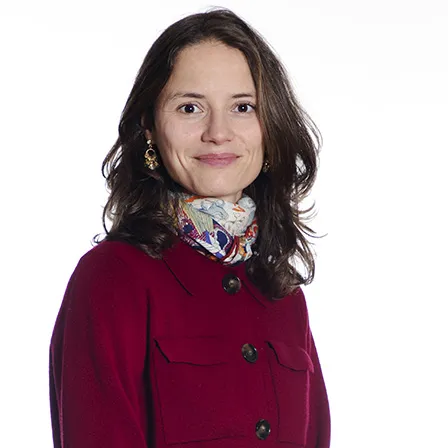
For Matthieu Procacci, Deputy Director General of SPEM, Bouge shows what the Plan Écoles is striving to achieve across the city.
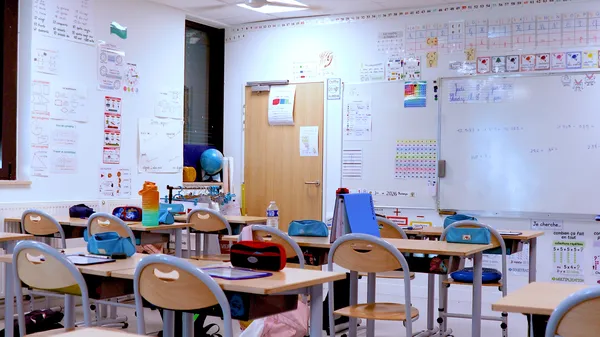
“Thanks to CEB’s financing, concrete change is taking shape before our eyes,” he says. “A school from the 1960s has been transformed into a modern facility that opens onto its neighbourhood - with vegetation in the playgrounds, cool spaces, large covered areas, modern dining facilities, a brand-new gymnasium and classrooms that are comfortable in both summer and winter.”
Working with institutions such as the CEB, he adds, also helps comply with ambitious environmental and social standards while sharing this model beyond its own territory.
A school the children deserve
At Bouge, everyday life has improved. “You really feel a new energy in this school,” says CE2 teacher Aurélie Ciaramaglia.
The facilities themselves encourage children to move, play and discover. Adjustable basketball hoops, badminton courts and adaptable sports equipment allow teachers to organise activities for different ages and abilities. On weekends, these facilities also open to local associations, extending the school's role as a community hub.
“And then there’s the slide,” Ciaramaglia adds. “It’s become the star of the new school.”
The pupils notice the difference too. “Before, sometimes things were broken,” says Chouaib, a pupil in CE2B. “Now everything is clean and freshly painted. I like this school much better.”
The school has also become a source of pride for the wider community.
“It’s changed life for the neighbourhood,” says Eloise Ndilu, a local resident. “It’s nice to wake up and see this kind of building here. It brings a feeling of freshness.”
For the former headteacher, however, the greatest achievement cannot be measured in square metres, energy savings or investment figures.
“Of course, we’re delighted because the school is new, beautiful and functional. We helped design it and think about how it should work,” she says.
"Beyond the infrastructure, it is about the equal opportunities it offers, for all.”
The sentiment is echoed by Ciaramaglia.
“This new school will have a positive impact on the children’s self-esteem. It’s a bit like telling them: you finally deserve what other children have, a beautiful, fit-for-learning school in your own neighbourhood.”