Pathway to integration and entrepreneurship for migrants
Salih’s remarkable journey from a political refugee to an aspiring entrepreneur in the Netherlands highlights the resilience of migrants and the transformative impact of support programs such as Qredits Entrepreneurial Training, financed by the European Union and the CEB.
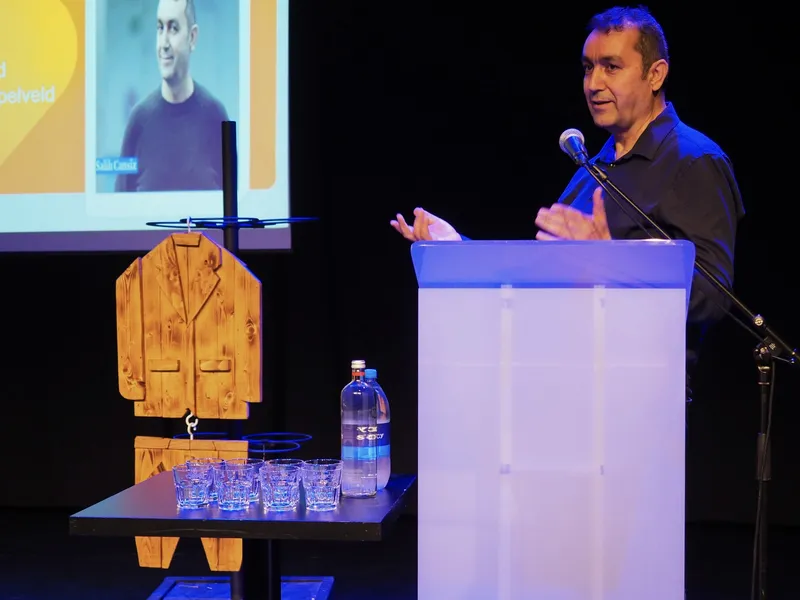
Judging from his friendly and happy demeanor you would never guess that Salih is a political refugee with a prison term behind him and a harrowing flight to the Netherlands without his wife and children.
Through a Dutch non-profit organisation called “Take Care B&B,” Salih was able to live with a host family for 11 months before securing his own place. Despite language barriers, he and his host, Hans, learned to communicate and developed a close friendship.
Hans has been instrumental in helping Salih integrate into Dutch society by introducing him to his professional and personal network. To further immerse himself in his new environment, Salih volunteered for a year to make himself useful and learn the language. When asked what he likes about the Netherlands, Salih responds, “Freedom, safety, and the ability to sleep well at night.”
A new beginning
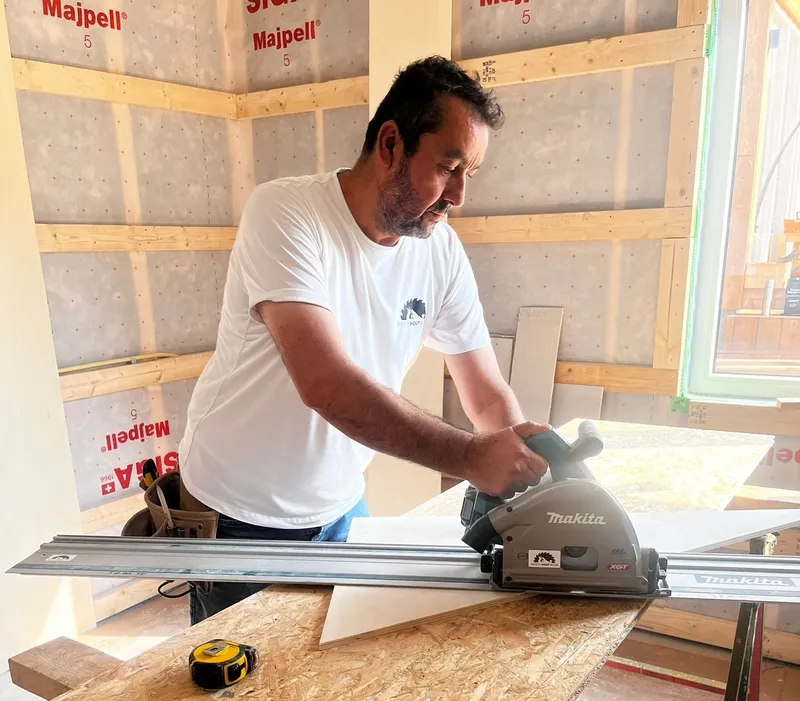
In his previous life, Salih had worked in carpentry since he was 15 and started his own carpentry business in 1988. For 11 years, he ran a successful company specialising in woodworking and key-making.
The Netherlands is home to many status holders* like Salih, who possess entrepreneurial skills and are eager to integrate and start businesses. However, the journey to entrepreneurship in the Netherlands is markedly different from that in their home countries due to varying laws and regulations.
Recent employment statistics reveal the precarious nature of work for many status holders: 73% are employed part-time, 84% hold temporary contracts, and only 3% are self-employed. According to the Dutch Council for Refugees, support for migrants seeking to establish their own businesses is minimal and often fragmented. Challenges such as unfamiliarity with local regulations, lack of professional networks, and perceived language barriers can hinder their entrepreneurial aspirations, highlighting the urgent need for enhanced support and resources.
Qredits Entrepreneurial Training Program
To address these challenges, the Qredits Entrepreneurial Training Program for Migrants offers personal coaching and support, with options for continued assistance post-completion. The program targets migrants aged 18 to 60 who hold a residence permit or are awaiting validation of their migration status. Participants must have a basic command of the Dutch language (levels A2-B1) but require comprehensive training to navigate the Dutch business landscape.
“One reason we wanted to help this target group is because there are not that many initiatives in the Netherlands that focus on supporting migrants who want to start their own business,” says Evelyne Oprel, International Relations Manager at Qredits.
The primary objective of the Qredits program is to empower migrants to start their own companies while also encouraging the continuation of business activities from their countries of origin. By providing essential knowledge about the Dutch business environment, laws, and regulations, the program equips participants with the tools they need to succeed.
“There are so many migrants with great entrepreneurial backgrounds and skills. They deserve a chance,” Oprel adds.
Salih's experience with Qredits
Salih learned about the Qredits Entrepreneurial Training Program through a friend. In January 2024, Qredits organised an entrepreneurial training program in Maastricht, close to where Salih lives, and he was accepted into the program. He has thoroughly enjoyed the training sessions, gaining valuable insights into the rules and regulations surrounding entrepreneurship in the Netherlands, which differ significantly from what he was accustomed to. His Dutch language skills, which he has been working on since day one, have also improved significantly.
Salih appreciates the strong support he receives from Marcel of the Starters Centrum, which hosts the Qredits training program, and his coach, Oscar. According to Oscar, Salih has been exceptionally motivated from the first lesson and learning fast. They maintain regular contact, and even after the training course ended, Salih has continued to receive advice from Oscar in preparing to start his business.
Strategic partnerships for success
The success of the Qredits Entrepreneurial Training Program is bolstered by strategic partnerships with the Dutch Council for Refugees and the Dutch Chamber of Commerce—two key stakeholders in promoting migrant entrepreneurship in the Netherlands. The Dutch Council for Refugees provides vital support and guidance to migrants from their first day in the country, while the Chamber of Commerce offers resources and information on establishing a business in the Netherlands.
The Qredits program for status holders is part of four pilot projects under Partnerships and Financing for Migrant Inclusion (PAFMI), currently underway in four EU countries: Belgium Finland, Italy, and the Netherlands.
As an EU pilot program, PAFMI adopts a flexible and multidisciplinary approach to foster partnerships that promote social inclusion for migrants and refugees. The initiatives primarily focus on enhancing employment opportunities—encompassing both traditional jobs and entrepreneurship—as well as improving access to education. These projects are developed through collaboration that include microfinance institutions, public administrations, and non-governmental organisations (NGOs).
Joint EU and CEB financing
PAFMI is implemented by the CEB and financed by a €3.5 million grant contribution from the EU / Directorate for Migration and Home Affairs (DG HOME) - Asylum, Migration and Integration Fund (AMIF). The pilot projects are linked to CEB loans with the aim of testing the sustainability of blended finance—loans plus grants—to help support migrant integration.
"PAFMI’s success comes from its ability to tackle the specific challenges of integrating third-country nationals through targeted outreach and tailored activities,” says Nida Krasniqi, Project Officer at the CEB.
“Its flexible approach brings together various partners, including migrants themselves, to amplify the impact of CEB loan-funded initiatives.”
Microfinance institutions, such as Qredits, play a crucial role in overcoming barriers, acting as essential facilitators of both economic and social integration for migrants.
“With this grant we were able to redevelop the program at A2 Dutch level and make it much more useful and effective to train migrant entrepreneurs and help them get off to a better start in the Netherlands,” says Oprel.
Thanks to PAFMI, Qredits has organised 18 entrepreneurial training programs for migrants throughout the Netherlands; nine have been completed, three are ongoing as of September 2024, and six are in preparation. Moreover, Qredits is starting to receive the first credit applications from entrepreneurs who have completed the programme.
“By blending grant support with CEB loans, microfinance institutions are empowered to offer more comprehensive services, ultimately contributing to the financial resilience and social inclusion of refugees and displaced populations,” says Krasniqi.
“We are pleased to show that blended finance—an approach regularly employed by the CEB—can work effectively with AMIF funds as well.”
“Stay curious, keep learning”
Salih's future looks promising. His wife and daughters joined him in the Netherlands 11 months ago and are adjusting well.
With the help of his coach and the Starters Centrum, he applied for a microcredit loan from Qredits. He is now awaiting approval from the municipality to officially launch his own business while still being able to retain some of his welfare benefits. The loan he applied for will be used to purchase a minivan and tools, enabling him to take on various individual assignments as well as work with a local construction company.
Salih offers this advice to other newcomers in the Netherlands: “Stay curious, keep learning, and always ask questions. Learn the language and take your time! And always try to help others, just as you are being helped here.”
* Status holders are refugees with a temporary asylum residence permit.