Saving every drop: How Bratislava is shaping the future of its water supply
In Bratislava, a city shaped by the Danube River, the past meets the future in its water system.
In 1886, the first pumping station in what is now Slovakia began operating in Karlova Ves, on the banks of the Danube. Together with the well at Sihoť Island and a reservoir at Bratislava Castle, it formed the city’s original water supply system — a pressure-gravity network that was the first of its kind in the country. Since then, the city’s water supply has relied on naturally filtered underground sources.
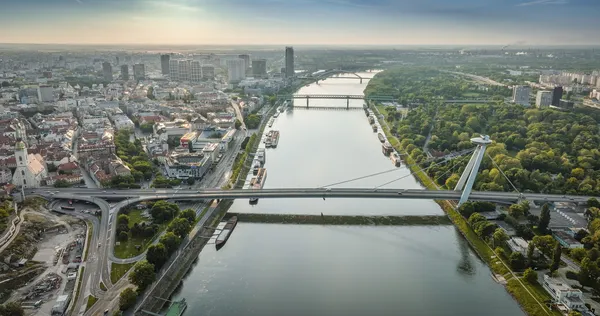
Over a century later, the Bratislava Water Company (BWC) is continuing this legacy of engineering as the largest water utility in Slovakia. But today, growing urban demand, ageing infrastructure, and climate pressures are putting that legacy to the test.
More than 800,000 people depend daily on the BWC for clean water and wastewater services, across the capital city and parts of the Trnava and Trenčín regions. Yet some of Bratislava’s underground pipes are over 70 years old, contributing to a water-loss rate nearing 27%. That’s nearly 17 million cubic metres of water lost every year – the equivalent of almost five thousand Olympic-size swimming pools.
Investing in clean water and sustainability
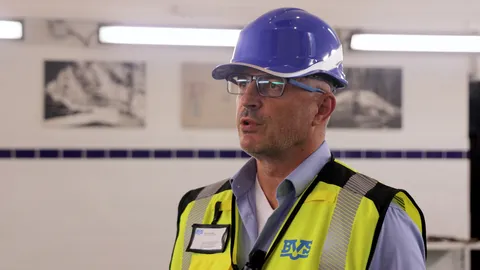
“Without potable water, you cannot survive,” says Viktor Ondrášek, Head of the Investment Department at BWC.
The combination of old infrastructure, increasing population and urbanised area as well as climate change have made modernisation both urgent and unavoidable.
To address these challenges, BWC has launched a multi-year investment programme, supported by two loans totaling €80 million from the CEB. The programme spans the full water cycle, from production and distribution to collection and treatment.
Key components include:
- Replacement of ageing water pipelines;
- Expansion and reinforcement of the distribution network;
- Modernisation of wastewater treatment facilities and capacity increase;
- Energy-efficiency improvements.
These investments not only provide service continuity but also bring clear environmental and social benefits.

“At CEB our mandate is to support social projects and help invest in people’s well-being,” says Jan Matuška, CEB Country Manager for Slovakia and the Czech Republic. “Very few things are more important than safe and reliable water for the people.”
Sustainability is at the heart of this collaboration.
By reducing leaks and upgrading treatment capacity, the water infrastructure investments lower energy consumption and help protect sensitive water bodies from contamination. New interconnections between water sources will also better balance supply across areas facing different levels of exposure to climate stress and pollution.
Modernising wastewater treatment
Bratislava’s wastewater network also faces considerable pressure.
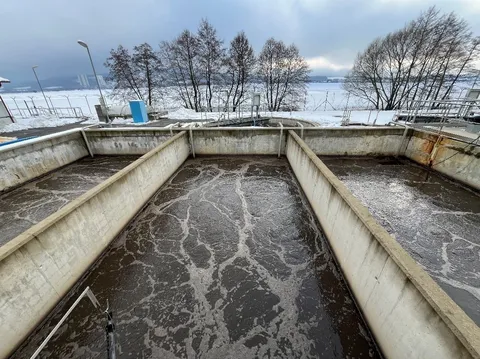
Much of the sewerage infrastructure suffers from structural damage, tree root intrusion, and reversed slopes. Roughly a quarter of the network is vulnerable to overflow during heavy rains — a problem expected to worsen with climate change.
As a result, BWC is modernising its treatment plants not only to meet environmental standards but also to improve reliability.
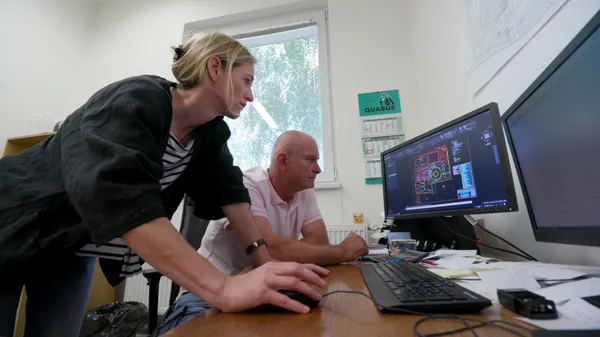
“It mainly concerns the reconstruction of the mechanical stage channels, the sand trap[1] itself, and especially the replacement of the sluice gates, which in the past were operated only manually,” explains engineer Miroslava Kabátová, Head of the Wastewater Treatment Division. “Now electricity has been extended there, and preparations are underway for remote control via an automatic process management system.”
[1] A sand trap provides for the quick removal of sand particles from the water, in order to prevent damage to mechanical components in the water treatment plant.
Partnering with CEB for the long-term vision
The impact of the investments is both short and long term. The works underway today will shape Bratislava’s water system for decades to come.
“We are not looking for a temporary solution. Because you cannot dig the pipes out before 40, 50, 60, 70 years, it is very important to lay them it in a perfect condition, in a perfect shape,” says Viktor Ondrášek.
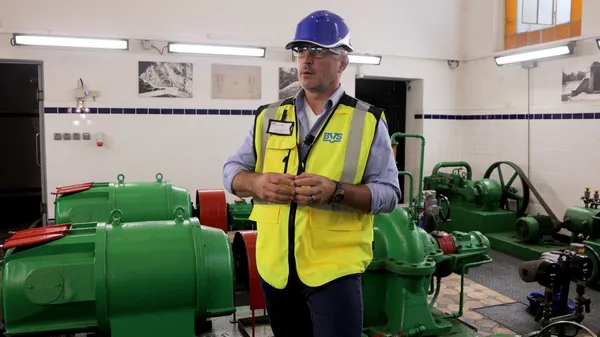
For BWC, the backing of a trusted public development partner has been critical.
“I can tell you that the financing of the kind the CEB has provided to us is very important, because without that, we would not be able to invest properly,” adds Ondrášek.
Future-proofing for the changing climate
Future resilience is particularly important as climate changes.
While the region still enjoys abundant freshwater resources, prolonged droughts, heatwaves, and more intense rainfall events are becoming increasingly common. Moreover, regional discrepancies exist between the southern and the northern part of BWC’s service area, where water is scarcer. This difference is expected to increase as a consequence of climate change, jeopardizing BWC’s capacity to serve all customers equitably.
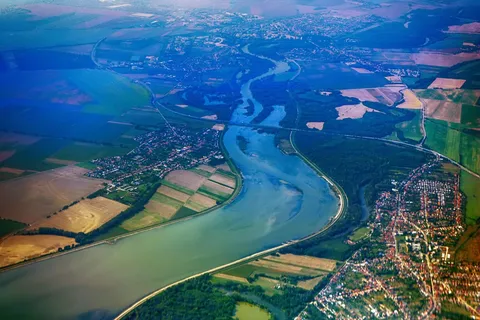
Ensuring that water networks are efficient, robust and available to all citizens is now a priority — for Bratislava and many other European cities.
“By partnering with the Bratislava Water Company we are improving decades-old infrastructure to address immediate needs – such as providing reliable source of water and decreasing water leakages - while also ensuring that the infrastructure will be resilient for decades to come,” says Matuška.
Water for development
More than just an infrastructure upgrade, the CEB’s collaboration with BWC is an example of development finance in action, providing both social and environmental benefits.
As Europe’s social development bank, the CEB is committed to:
- Supporting sustainable infrastructure for safe drinking water and wastewater systems
- Applying a “vulnerability lens” to ensure no one is left behind
- Working with other multilateral development banks (MDBs) to scale up joint action for strong impact
At the meeting of the Heads of MDBs hosted by the CEB in June 2025 in Paris, the MDBs committed to significantly increasing collective support for global water security by 2030, in view of water’s significant role in human development.
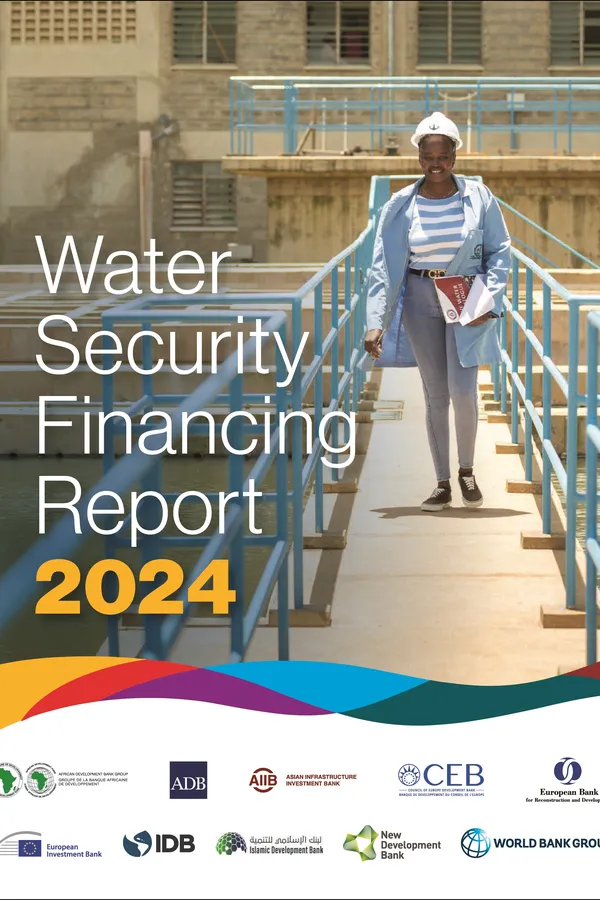
This commitment was followed by the official launch of the 2024 Joint MDB Water Security Financing Report at the United Nations Finance for Development Summit in Sevilla.
A blueprint for the region
“We really hope to be able to finance more of this kind of operations in the future,” notes Matuška. “We already have one similar operation in the Czech Republic and hopefully more upcoming in Slovakia.”
From historical engineering to 21st-century resilience, Bratislava’s water story is inspiring.
With every leak fixed and every litre saved, the city is protecting one of its most precious resources — not just for today, but for the future.