Supporting low-carbon economy and regional development in Slovak Republic
The CEB’s € 300 million EU Co-financing Facility Loan (ECF) will partially finance priority projects under the Partnership Agreement for the 2014-2020 programming period.
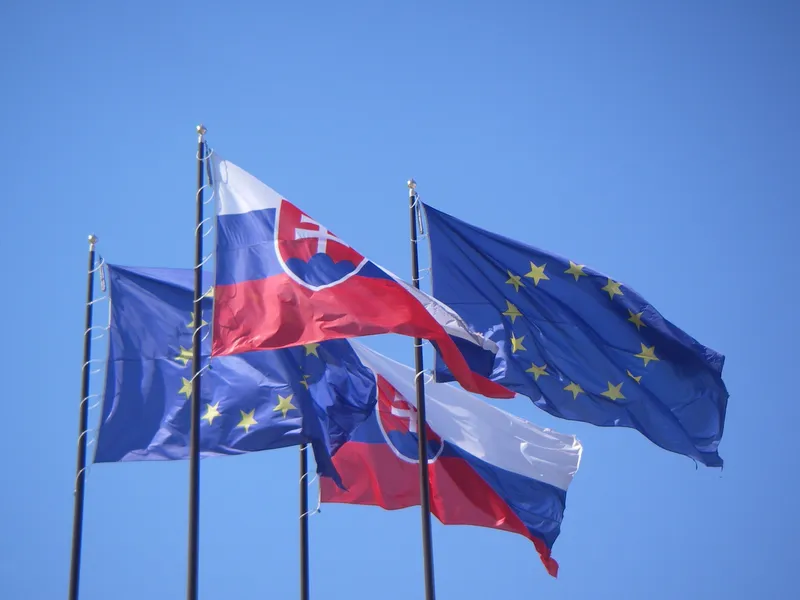 The EU Co-financing Facility is one of the CEB’s
latest financial instruments, designed under the new Development Plan for
2014-2016. ECF loans are developed at country level in conjunction with
different EU financing instruments directly supporting current EU objectives.
The EU Co-financing Facility is one of the CEB’s
latest financial instruments, designed under the new Development Plan for
2014-2016. ECF loans are developed at country level in conjunction with
different EU financing instruments directly supporting current EU objectives.
The loans, which will be harmonised with the respective EU programmes, facilitate better absorption of EU Funds in the CEB’s priority sectors.
This enables the CEB to play a catalytic role by facilitating the absorption and use of available EU grants.
The European Structural and Investment Funds (ESIF) have been an important source for public spending in the Slovak Republic. During the period 2007-2013, the country received € 11.6 billion, with three-quarters of the funds spent at the regional level.
The latest Partnership Agreement sets out the strategy for the use of ESIF in the country and paves the way for investing € 13.77 billion in Cohesion Policy funding.
The CEB’s loan will be used to finance two of the seven operational programmes: the quality of the environment and integrated regional operational programmes.
The Operational Programme ‘Quality of the Environment’ supports environmental protection, active adaptation to climate change and the promotion of an energy efficient, low-carbon economy.
Some of the key expected results are to extend flood protection to more than 12 000 citizens, to improve wastewater treatment for more than 200 000 citizens and to increase the share of renewable energy sources to 15.5% of gross final energy consumption.
The Integrated Regional Operational Programme (IROP) aims to contribute to improving the quality of life and to ensuring the sustainable provision of public services as well as balanced and sustainable regional development. At its heart is the concept of regional competitiveness, which includes accessible and efficient public services, business support and job creation.
1300 additional jobs are expected to be created under the IROP.
Investments in health infrastructure and community services will reduce inequalities of access and promote social inclusion through the transition from institutional to community-based services.
2.3 million Slovak citizens should benefit from improved health services in 134 newly created integrated healthcare centres, while the percentage of individuals receiving community-based care is expected to increase to 27%.
***
Photo by Flickr user Ian Brown.