Taking action in Madrid
Spain has been among the hardest hit nations in the COVID-19 crisis, with the autonomous community of Madrid accounting for almost one third of Spain’s confirmed cases. A €200 million public sector financing facility (PFF) from the CEB is helping to minimise loss of life and improve citizens’ health.
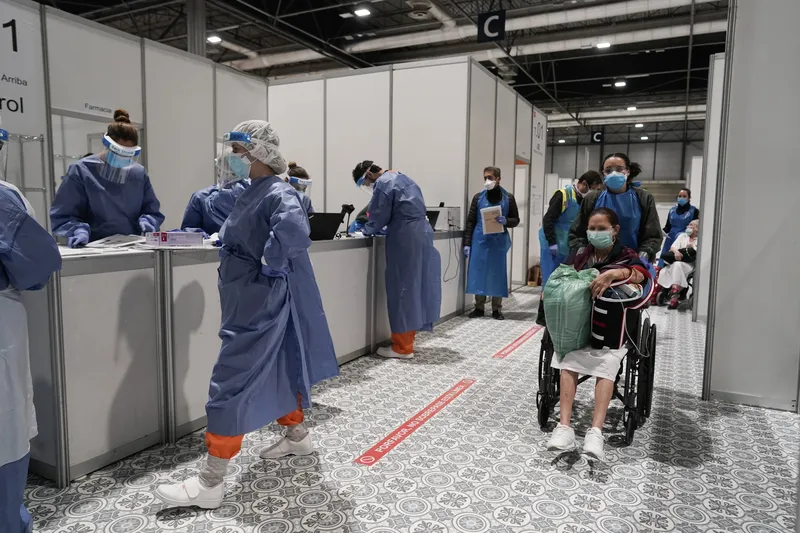 The autonomous community of
Madrid has almost seven million
inhabitants who are served by 34
public, and 48 private, hospitals.
As a result of the COVID-19 pandemic, the
region’s health and social care systems have
come under tremendous strain, resulting
in increased needs for medical facilities,
equipment and staff. In fact, Madrid expects
to spend over €2 billion in extraordinary
expenditure on health and social services
related to COVID-19.
The autonomous community of
Madrid has almost seven million
inhabitants who are served by 34
public, and 48 private, hospitals.
As a result of the COVID-19 pandemic, the
region’s health and social care systems have
come under tremendous strain, resulting
in increased needs for medical facilities,
equipment and staff. In fact, Madrid expects
to spend over €2 billion in extraordinary
expenditure on health and social services
related to COVID-19.
Support from the CEB
 In March the regional government launched
a COVID-19 Action Plan, which included a
range of measures to cope with the influx of
patients, and in mid-April the CEB approved
a PFF loan. This was done by written
procedure as part of a fast-track mechanism
established by the Bank in response to the
coronavirus crisis.
The PFF was the first loan agreement
signed between the CEB and a European
region during the pandemic, and will be used to part-finance Madrid’s extraordinary
expenditure on health and social services
related to COVID-19 such as:
In March the regional government launched
a COVID-19 Action Plan, which included a
range of measures to cope with the influx of
patients, and in mid-April the CEB approved
a PFF loan. This was done by written
procedure as part of a fast-track mechanism
established by the Bank in response to the
coronavirus crisis.
The PFF was the first loan agreement
signed between the CEB and a European
region during the pandemic, and will be used to part-finance Madrid’s extraordinary
expenditure on health and social services
related to COVID-19 such as:
- Hiring of additional medical staff such as doctors, nurses and auxiliary nurses as well as overtime expenses
- Hiring of 400 new COVID-19 hotline operators (the hotline has seen daily calls surge from around 70 to 7,000)
- Additional medical and pharmaceutical supplies, such as medicines or diagnostic tests
- Specialist equipment needed for COVID-19 patients such as additional intensive care beds, ventilators, face masks, gloves, and hand sanitiser
- Strengthening of services in care homes for the disabled and elderly
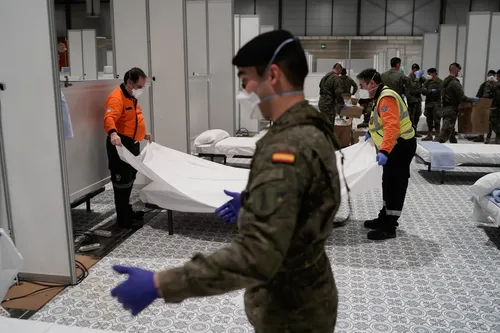
Funding the conversion of IFEMA
CEB funds will also be used to part-finance
the conversion of Madrid’s conference
centre, IFEMA, into the biggest hospital
in Spain. This field hospital became
operational on 23 March and has treated
more than 4,000 patients with mild
symptoms to prevent the spread of the
virus and reduce the pressure on hospitals.
It had a capacity of up to 5,000 beds and
was closed on 1 May.
-----------------------------------------
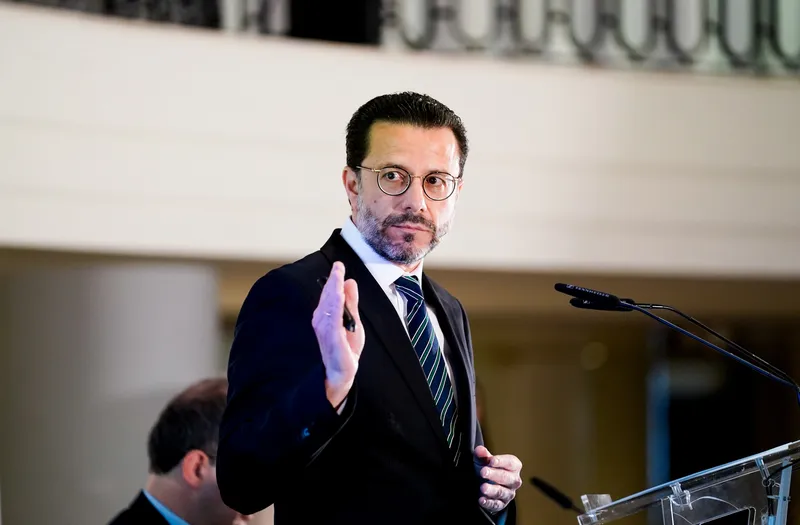
In discussion with... Javier Fernández Lasquetty, Regional Finance Minister
 Info: How has the Madrid region
responded to the COVID-19 crisis?
Info: How has the Madrid region
responded to the COVID-19 crisis?
JFL: The Madrid region began to take
measures to protect the population before
the Spanish Government decreed the
state of emergency. Among many other
measures, we approved the closing of
educational centres and centres for the
elderly, and facilitated teleworking among
public servants.
In the health sector, the largest field hospital in Spain was created in barely two days at IFEMA, and was recognised by the WHO as ‘extraordinary’.
Our health workforce has been reinforced with the recruitment of 10,000 people. In addition, we have managed to bring ten aircraft with medical supplies/equipment to the region, which have brought more than 500 tons of necessary resources for our hospitals and medical centres.
We have also implemented economic and fiscal measures to help companies and the self-employed, so that they have liquidity and can maintain their activity. We have also approved the postponement of the payment of taxes managed by the region of Madrid while the state of emergency is maintained.
In short, we have adopted preventative measures, we have made, and we are making, a very important effort at the health level to combat the pandemic and we have designed a package of measures so that companies and the self-employed in the region are affected as little as possible.
Info: What are the priorities covered
by the loan?
JFL: The loan signed with the CEB has a
specific purpose: to finance the health
expenditure arising from COVID-19. We
are talking about the purchase, among
other things, of equipment and materials
to treat patients with coronavirus and
to protect our health workers, and to
set up health infrastructure, such as
IFEMA. In addition, we have expanded
the health workforce with the hiring of
10,000 people, who we will keep on staff
throughout 2020. All this requires financial
support as it is generating extraordinary
expenses that we estimate at €2 billion.
Info: What difference has it made to
the region to be able to obtain this
funding rapidly?
JFL: We are very grateful for the CEB’s
support.
We are the only European region that has received funding from the Bank.
This reflects, on the one hand, the
sensitivity of the CEB in the fight against
COVID-19 and, on the other, the trust in
the region of Madrid and its ability to meet
its obligations. We are the Spanish region
with the lowest debt (14%), together with
the Canary Islands, and we have managed
to meet the deficit target for 2019.
Related publications
-

INFO 03/2020
This issue of INFO magazine offers an overview of the Council of Europe Development Bank's response to the … Published: June 2020 Read