Milan: The school that thinks differently
Milan primary school illustrates how innovative EIB-CEB financing can spark change in education and improve learning.
Author: Chiara Robotti
After the demolition of their old school in northern Milan, Viscontini pupils were asked to draw the new building the way they wished it to be. A creative little girl named Vittoria imagined her future “scuola dei colori” (“school of colours”) with yellow, red, green, blue and yellow squares.
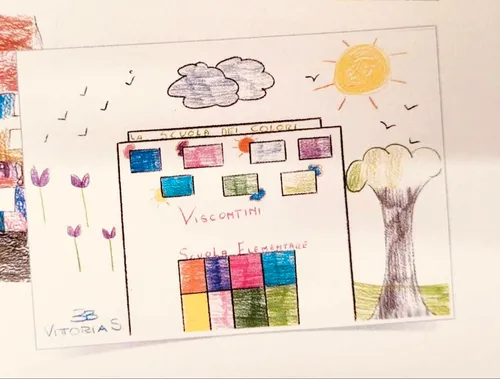
Vittoria’s drawing inspired architects and designers of the new school building. Colourful, spacious and bright, Viscontini School is now a largely open plan with few internal walls or classrooms shut off behind doors. This is no traditional school.
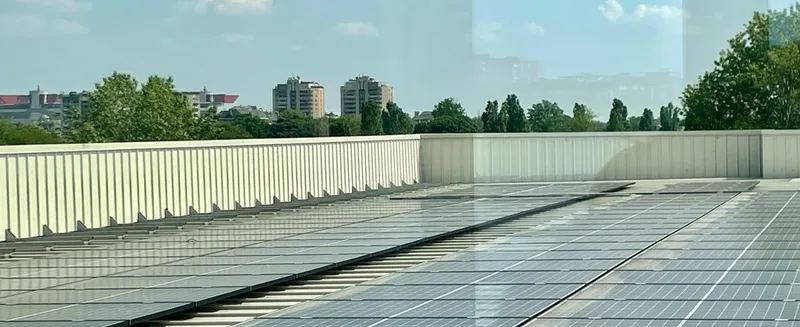
Recent studies have shown that a student’s performance is enhanced by a school with a better physical environment, including natural light, high ceilings, good air quality and steady temperature. Improvements in school buildings also produce energy savings, safer and healthier environments for children.
However, financing for schools has historically meant just providing money for buildings. There is little thought for how the design will impact their use. But “education infrastructure, pedagogical practices and other education investments need to be conceived from the beginning as a single, intertwined process,” says Silvia Guallar Artal, an economist in the European Investment Bank’s education team.
Guallar and her colleague from the Council of Europe Development Bank, Yael Duthilleul, are working on an innovative approach to finance education infrastructure projects to ensure that millions, and sometimes billions, of euros in investment are deployed in a way that best supports learning and helps children acquire the skills they will need in the future.
The European Investment Bank (EIB) has invested more than €9 billion in education infrastructure in the last five years, 97% of which was spent within the European Union. It’s important the infrastructure is effective and provides real educational value for money.
For more, visit EIB website.