Environmental sustainability: a priority for social inclusion
Important CEB actions concerning the environment in 2022 include loans for energyefficient housing, funding for urban and rural initiatives, and projects to strengthen resilience by preparing and protecting people in the event of natural disasters.
The CEB works hard to keep the environmental footprint of its social investments as light as possible. Not only is this essential for our planet, but the Bank believes that social inclusion and progress on the environment, particularly climate action, go hand in hand, and that social and climate action can be mutually reinforcing. The Bank plays an increasingly lead role in fostering a green transition, in part thanks to its rigorous compliance testing for approving loans and grants, as well its own growing technical expertise in climate-related issues. The CEB works at the nexus of social and environmental efforts, seeing them as being mutually reinforcing: just as environmental sustainability is key for people’s wellbeing and livelihoods, and for social cohesion more broadly, so effective climate action depends on having everyone from all communities on board, including the most vulnerable.
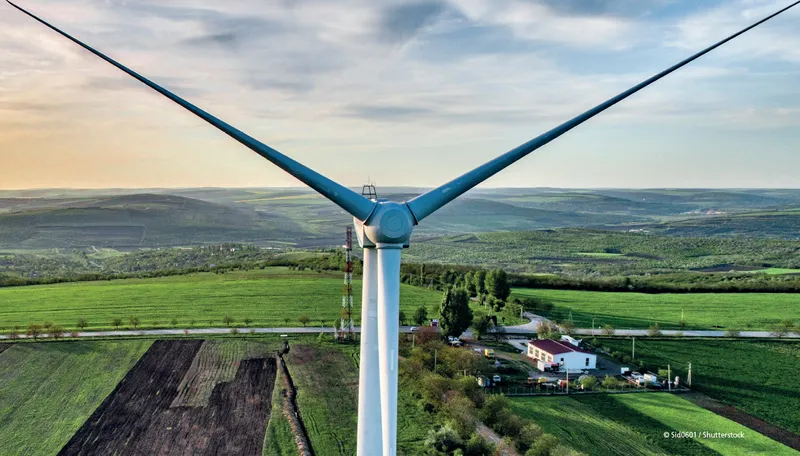 Important CEB actions concerning the environment in 2022 include loans for energy-efficient housing, funding for urban and rural initiatives, and projects to strengthen resilience by preparing and protecting people in the event of natural disasters, including those that are climate-related. Thanks to a new screening process introduced for all direct investment loans, the Bank made further progress in ensuring that environmental sustainability was both factored in as a central criterion for all social investments, and aligned with the goals of the Paris Agreement on climate.
The CEB funds are expected to benefit about 20 million inhabitants, and will help improve disaster responsiveness, strengthen physical capacity and critical infrastructures, against flash floods for instance, and enhance public awareness.
Investing in environmental resilience
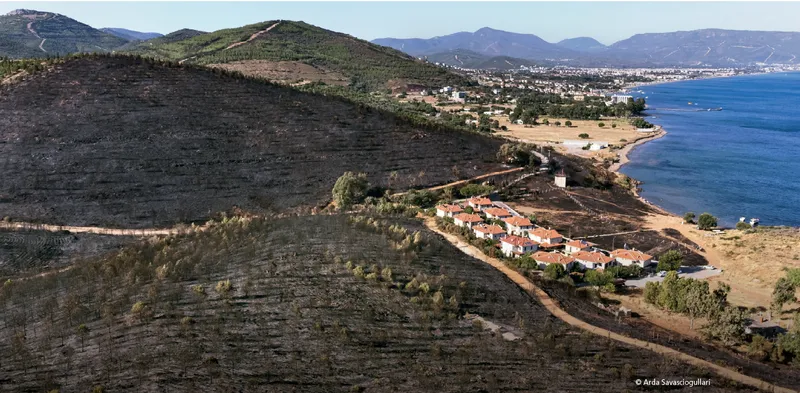 Strengthening Türkiye’s capacity at local level to be better prepared for forest fires and other natural disasters, such as drought or floods, as part of efforts to adapt to climate change: this is the main overall goal of this CEB public finance facility to Iller Bankasi AS (ILBANK), the municipal development and investment bank of Türkiye, amounting to €200 million.[1] The loan is a response to major forest fires – some 275 of them – which ravaged parts of the country in July and August 2021, scorching more than 200 000 hectares of land (nearly 800 square miles, equivalent to three-quarters of the area of Luxembourg). The forest fires took eight people’s lives and forced another 100 000 people to be evacuated. It represented one of the worst wildfire episodes in the country’s history, with devastating knock-on effects both on climate and biodiversity.
The CEB loan, which has a full government guarantee and will run to 2026, marks the CEB’s first collaboration with ILBANK. While the forest fires prompted the loan, the funds will help the dozen or so municipalities most affected by the fires to address natural disasters more broadly: Türkiye is exposed to several geological and hydro-meteorological hazards, such as floods and earthquakes. The CEB funds are expected to benefit about 20 million inhabitants, and will help improve disaster responsiveness, strengthen physical capacity and critical infrastructures, against flash floods for instance, and enhance public awareness. An initial step will be to assess the current fire-fighting capacity, including equipment, technology and warning systems, as well as buildings and vehicles, which will allow ILBANK to set priorities for investment. The overall goal is to create a proactive risk management approach for a future in which climate- related events could become more frequent.
[1] A major earthquake struck Türkiye and Syria on 6 February 2023, causing a heavy loss of life and widespread devastation. CEB Governor Carlo Monticelli issued a statement to express his sadness and solidarity, and that CEB stands ready to provide emergency assistance to help alleviate the effects of this catastrophe.
Towards energy efficiency and climate action in apartment dwellings
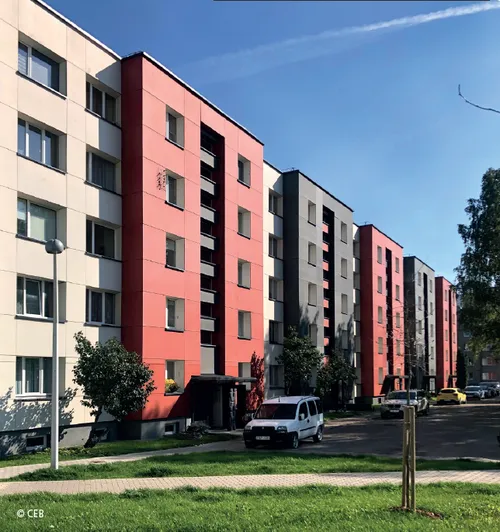 This CEB loan of €40 million will support Lithuania’s efforts to improve energy efficiency in apartment blocks, particularly those built before 1993 when standards applying to insulation, heating and ventilation were weaker than today. Buildings account for some 40% of global greenhouse gas emissions, mostly from heating, lighting and the general energy use. Improving the energy efficiency of buildings, both new and old, is therefore important both to reduce running costs in times of high inflation, and to help mitigate and adapt to climate change.
There are around 39 000 apartment blocks comprising some 800 000 apartments in Lithuania, approximately 90% of which fall into this outdated category. Nearly all apartments are privately owned, with only 3% for municipal rent. In 2020, the Lithuanian government selected Šiaulių Bankas as partner for creating an investment platform to leverage European Union funds and attract financing for renovating apartment buildings in the country. “SB modernizavimo fondas” investment platform was created which raised around €275 million to 2025 from financial institutions and other investors. By end-2025, it is planned to renovate at least 800 apartment buildings for more than 25 000 households. The CEB funding will cover part of these renovation investments with positive social and environmental effects as well as estimated energy savings of around 40%.
Supporting a long recovery after an earthquake
Italy is another country where CEB loans are helping member countries deal with the aftermath of natural disasters. Parts of the country – some 80 000 square kilometres – still bear the scar of the series of earthquakes that killed nearly 300 people and left hundreds of thousands homeless or in vulnerable situations in central Italy between 2016 and 2017. The CEB had lent €350 million to Cassa Depositi e Prestiti (CDP), the National Development Institute, in 2017 for reconstruction, but progress was slowed as rough terrain hampered access to the affected areas. There were also administrative challenges, and the simplification and streamlining of the procedures for accessing the available funds have enabled a faster recovery action on the ground since 2020. By the first quarter of 2022, around 5 900 buildings were rehabilitated, allowing some 14 000 families to return to their homes. The CEB loan represented 21% of funds available, and helped finance 3 028 private initiatives, mainly to address damaged housing and business infrastructure repairs, with an average contribution of €115 000 per application. A clear CEB value-added was to provide cost-efficient funding for social investments that resulted in substantial savings of €32 million for the national budget.
But the scars of the earthquakes run deep, and there remains much work to do for the affected areas to recover. Estimates in 2022 put total expenditure for physical repairs at €27 billion, around €10 billion more than estimated after the disaster – and this does not cover the social and cultural damage wreaked by the earthquakes on whole communities. For this reason the CDP partner has requested a new loan of €350 million, bringing the total since 2017 to €700 million. The new loan would finance up to 50% of eligible sub-loans in 2022-24.
©CEB 2023