Inclusive growth with opportunities for all
Widening inequalities undermine growth and put everyone’s future at risk, as evidence since the 2008 financial crisis shows. The CEB is committed to financing projects that promote growth whose benefits are widely and fairly distributed, stimulating people’s potential and creating opportunities for all. Nearly half of all loans in 2022 privileged action towards inclusive growth.
These actions cut across a range of countries and sectors, including housing, healthcare, and education, as well as support to small firms, including micro firms, and projects aimed at improving life in urban and rural areas. Most CEB countries had barely recovered their pre-pandemic levels, if at all, when inflation mounted in 2021-22, followed by the sharp jolt caused by Russia’s aggression against Ukraine. The CEB loans aimed to help member countries address the effects of these crises, while continuing to build a brighter, more inclusive and resilient future.
Micro-enterprises and women’s economic empowerment
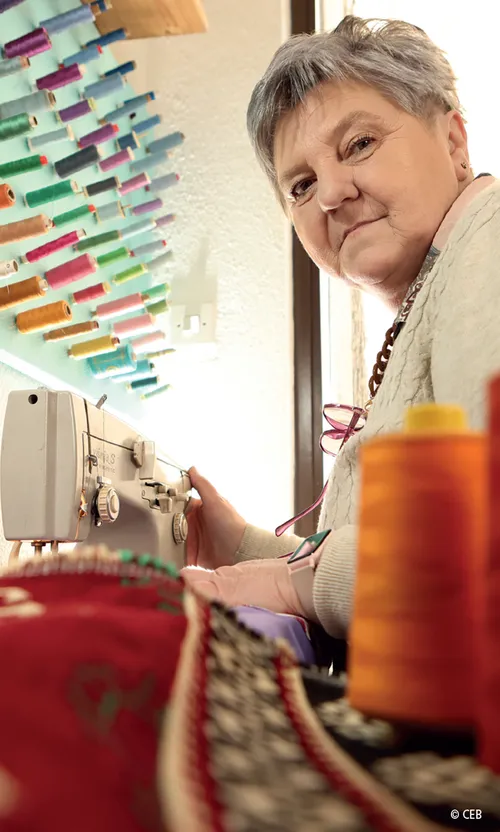 Promoting entrepreneurship, supporting jobs, and tackling gender inequality are key goals of a €4 million CEB loan to Mi-Bospo Microcredit Foundation, a non- profit lender in Bosnia and Herzegovina. The new loan is aimed at low-income households and micro-businesses, many of them led by women, and could support as many as 3 500 projects. This is the second CEB operation with Mi-Bospo; the first loan of €2 million approved in 2018 scored a “very satisfactory” performance rating by the CEB technical review, having helped maintain 4 250 jobs and create 960 new ones. Moreover, women accounted for around 70% of all final borrowers. Unemployment is high in Bosnia and Herzegovina, and gender inequality remains entrenched, despite legislative efforts to promote women’s participation in the labour market. The new loan is expected to help promote women’s economic empowerment, foster financial and social inclusion, and improve living conditions. Financing start-ups is another key objective of this loan, in particular to finance the purchase of the equipment, goods, materials and vehicles needed to start and run a business. The support provided to small-scale family farms is also important, for regional development and addressing rural poverty. Funds will also be made available for home improvements, including for energy savings.
Towards climate-friendly affordable housing
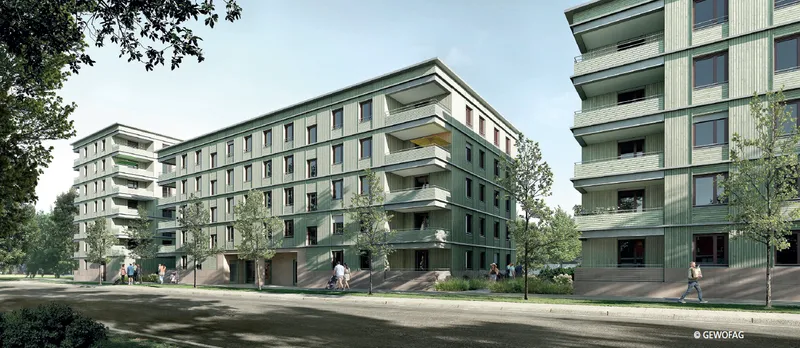 Housing rents in Munich are among the highest in Germany. The city’s population has increased by more than 27% since 2000, driven to a large extent by the economic strength of the region. An unequal wealth and income distribution, combined with a limited housing supply, has made housing unaffordable for many low to middle income groups. Moreover, Munich has a relatively low provision of municipal housing compared with other German cities. GEWOFAG is a social and affordable housing provider fully owned by the city of Munich. It aims to enhance its response to the city’s challenges by building 3 178 affordable housing units in 2021-25, and some 7 000 by 2030. The CEB program loan of €150 million approved in March 2022 will help finance the construction of 10 sub-projects to provide 1 428 affordable rental housing units by 2026. These units will incorporate childcare and other local services, as well as spaces for social enterprises. Some 95% of the apartments foreseen for construction under the CEB loan will be reserved for low-income tenants and allocated according to strict eligibility rules by the social welfare department of the City of Munich’s Office for Housing and Migration. Construction in line with high energy performance standards will ensure that the CEB loan supports Munich’s progress towards its goal of climate neutrality by 2035.
Small business with major potential
Small and medium-sized enterprises, including micro-size firms (MSMEs), account for three quarters of employment in Bulgaria, which is well above the EU average. Yet lending conditions for such firms are challenging. The Bulgarian economy, whose GDP per head is among the lowest in the EU, has suffered a double blow from the pandemic and the Russian aggression in Ukraine, while a series of inconclusive general elections since 2021 have caused some political uncertainty. A CEB loan of €175 million to the Bulgarian Development Bank (BDB), guaranteed by the Bulgarian government, will help encourage inclusive growth by boosting entrepreneurship and jobs, while promoting environmental sustainability. Indeed, BDB aims to transform its loans portfolio over the next five years to cater only to MSMEs, and has set a minimum of 20% as a target for lending to “green” MSME projects, in areas such as clean tech, renewable energy and energy efficiency, with a view to spurring a green transition. BDB plans to allocate the CEB loan during 2023-26, which could translate into support for over 1 000 businesses, within a ceiling of €2.5 million per entity. Furthermore, the CEB approved a grant from its Green Social Investment Fund with the purpose of supporting the BDB in the development of an environmental, social and governance (ESG) operational framework, and a monitoring and reporting methodology that is ESG-compliant.
©CEB 2023
Related publications
-

Report of the Governor 2022
In 2022 the CEB demonstrated its key role in supporting social cohesion across Europe and as a first … Published: April 2023 Read