Supporting vulnerable groups is a strategic necessity
The CEB’s decision under its Development Plan 2020-22 to sharpen its focus on vulnerable people under its three priority action areas proved timely, as the COVID-19 pandemic surged, disproportionately affecting the weakest in society. Widening inequalities within countries were already leading to new demands for support to those near the bottom of the income distribution. This highly vulnerable group is most at risk of slipping into poverty or social exclusion, which in Europe can be as high as a fifth of those living in households with dependent children, Eurostat data for 2021 show. The Russian aggression against Ukraine, combined with rampant consumer price inflation and sluggish growth, added fuel to the fire. New loan approvals in support of vulnerable groups in 2022 were understandably dominated by efforts to support refugees from Ukraine and their host communities in European countries, as described in the previous chapter.
However, social inclusion is about leaving no one behind, and the CEB pushed forward with initiatives on other fronts too, including loans and grants for improvements in healthcare, social housing, education and training, and funding to upgrade basic standards in prisons.
One-third of all new loan approvals in 2022 directly supported vulnerable groups, representing an increase on 2021. Such is the importance of this line of action that the CEB, under its Strategic Framework 2023-2027, will systematically apply a “vulnerability lens” to all of its lending operations, to identify the specific sources of vulnerability each project aims to address so as to design better solutions and boost social cohesion.
Social care for an ageing and vulnerable population
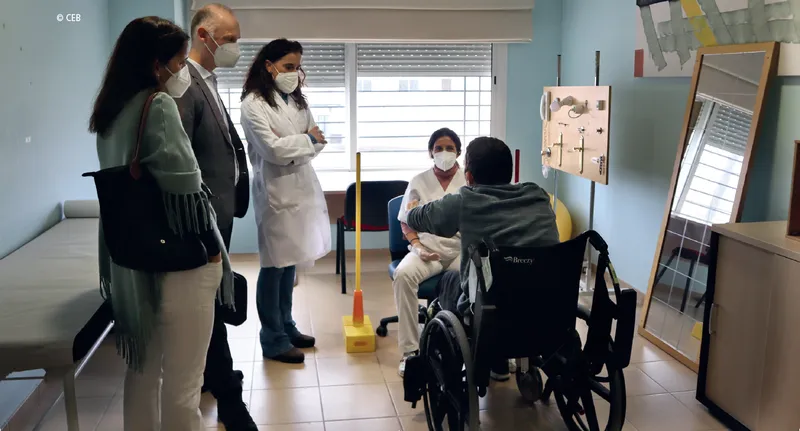
Santa Luisa de Marillac is a care centre for the elderly (residencia de ancianos) in Almeria, in Andalusia, an autonomous region of Spain. It is owned by a non- profit foundation and caters for up to 37 guests over 65 years’ old. Some 350 km west of Almeria, in Écija, is another social care centre, the Residencia Polaris, which focuses on services for people with disabilities. These are just two examples of many social care centres that have benefited from a CEB loan of €200 million to help Andalusia fund its social needs.
Investing in social care to help vulnerable people, and promoting inclusiveness and better health, are primary missions of the CEB, and Andalusia embodies the challenges that these represent. It is Spain’s largest region by population, with over 8.4 million people, nearly a fifth of whom are over 65 years of age, and many of those in their late 80s. This is in keeping with national patterns, except that Andalusia’s GDP per head is 75% of the national average. Moreover, there are some 400 000 people under 65 with disabilities in the region.
Andalusia’s authorities budgeted around €1.6 billion to social care in 2022, of which €1.4 billion for the elderly and disabled. The region has launched strategies and action plans aimed at improving their care services, backed up with interactive online services that provide information and assistance. The CEB loan helps fund the procurement of services for elderly homes, day centres and other basic support services for these vulnerable groups, including home assistance care. It will potentially benefit around 1.9 million people, both in social care centres and households with dependents.
New school buildings bring momentum to Malmö
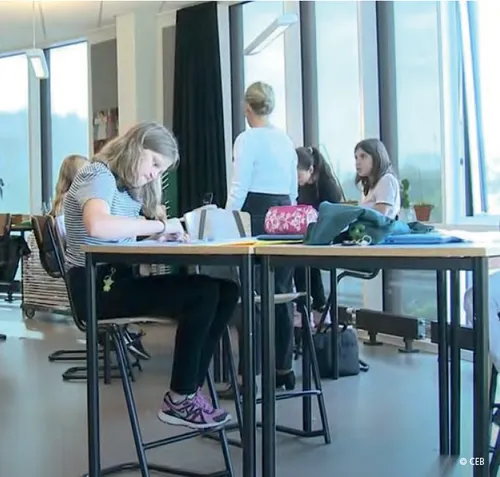
Malmö is Sweden’s third largest city, and one with a strong legacy as an industrial port. Located on the Oresund strait, opposite Copenhagen in Denmark, Malmö has historically been a magnet for workers from abroad. The city, which has been affected by high unemployment, has been fostering a transition towards becoming a greener, high tech, cultural dynamo. Education, particularly compulsory schooling, is a key priority for the City of Malmö, which will be the beneficiary of a loan increase of €80 million, adding to the €160 million loan originally approved for the period 2016-17 to help finance the construction and upgrading of school facilities, for a total expected cost of €420.5 million. The initial amount was fully disbursed and allocated to 65 eligible projects to build or renovate schools. The CEB also supported the city by providing technical recommendations on how to enhance the effectiveness of these investments. Recommendations included involving the different stakeholders in the planning process, highlighting the importance of supporting teachers in developing their pedagogical skills using newly available learning environments, and allocating time and resources to the entire school community in order to take ownership of these new spaces, while providing feedback to planners on possible design improvements for future investments.
The benefits of these projects, which focus on facilities for compulsory schooling, including preschool, and will respect strict environmental and energy standards, are expected to spread beyond local communities to displaced persons, including refugees from Ukraine.
See CEB (2020), “School Design and Learning Environments in the City of Malmö, Sweden”, Thematic Review Series, Paris.
Upgrading the standards of prisons brings wide benefits, such as helping those who faced multiple social and personal issues prior to incarceration, while also creating more effective work places for prison staff.
Modernising prisons to support the rights of prisoners and their rehabilitation
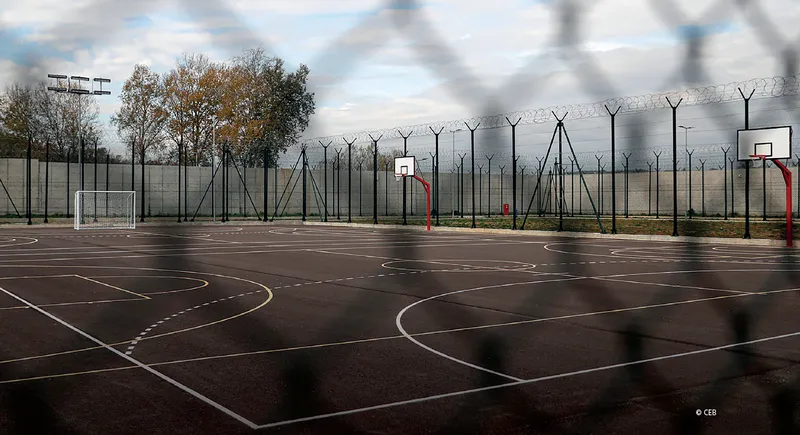
Improving the quality of prison facilities in Serbia is the purpose of this CEB loan of €30 million. The Council of Europe upholds the basic human rights and dignity of all citizens. Decent prison conditions are imperative not only for the wellbeing of detainees, but also for their rehabilitation and integration back into society later on. Upgrading the standards of prisons brings wide benefits, such as helping those who faced multiple social and personal issues prior to incarceration, while also creating more effective work places for prison staff. Moreover, there are international standards to respect, such as the European Prison Rules, and more countries are upgrading their penitentiary facilities to meet accession requirements to the EU, for instance.
This is also one of the motivations behind the CEB loan, which is the Bank’s third for improving Serbia’s prisons. The loan will co-finance the construction of a new prison in the city of Kruševac and a new accommodation pavilion at the Sremska Mitrovica prison. The cost of the prison project is estimated at €42.3 million.
The project involves replacing dilapidated buildings, some of which date back to the Second World War, and as works will be carried out according to European Prison Rules, they will help underpin Serbia’s bid for EU accession.
Crucially, the loan is expected to generate strong social benefits. The new prisons will include modern facilities designed to address the issues leading to crime, such as addiction, learning difficulties, and lack of skills, as well as problems affecting prisoner welfare, such as overcrowding. Facilities will include workshops, healthcare and sports facilities, classrooms, libraries and cultural spaces, and areas for family visits, the aim being to promote rehabilitation by encouraging a positive community spirit.
The projects are also expected to benefit local communities by upgrading access routes and local services, and as well as having a low carbon footprint, should contribute to UN Sustainable Development Goals on inequalities and justice.
A grant of €100 000 from the CEB’s Green Social Investment Fund (GSIF) will finance measures to reduce the energy consumption of these two prisons. Moreover, the project will aim to involve inmates directly in implementing any energy efficiency proposals, through vocational training and “learning- by-doing”.
©CEB 2023