On a stronger footing for challenging times: CEB in 2022
Russia’s aggression against Ukraine, a cost-of-living crisis, an intensifying climate crisis: the past year has been a severely testing one for Europe on many fronts, with the scene set for continued stiff challenges ahead. The Council of Europe Development Bank (CEB) has been mobilising its resources and expertise, alongside other international institutions, to support member states and their citizens in responding to these unprecedented, interwoven challenges.
The still unfolding crises that have shaken Europe have confirmed CEB as a veritable linchpin within the international development finance architecture. Thanks to key support deployed in record time, together with historic breakthroughs under a new Governor, the CEB ended 2022 in a stronger, fitter position for serving its clients and helping them address their social challenges. But the stakes remain high, as this Report of the Governor will show: in these fragile and difficult times, the mission of the CEB as Europe’s only social development bank has rarely been more relevant and urgent.
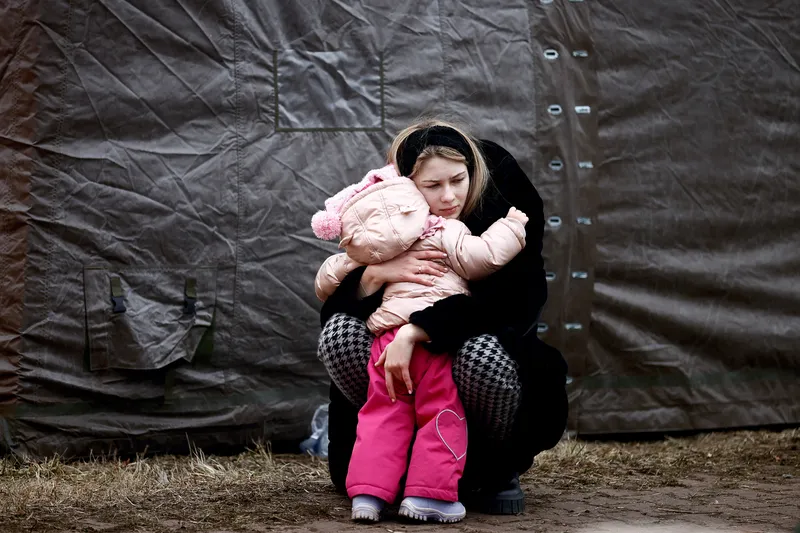
Russia’s aggression against Ukraine and its damaging effects, particularly on neighbouring countries, absorbed the CEB’s attention in 2022, though the Bank managed to keep its focus on other important fronts, too, including the COVID-19 pandemic and the deepening climate crisis. Together, these multiple crises have led to widespread loss of life and human suffering, as well as an upsurge in cross-border refugee flows, particularly from Ukraine.
A cost-of-living crisis added fuel to the flames, as an energy price shock drove inflation up to levels not seen in a generation. Strong government policies and intensive international co-operation helped to bolster employment and stave off recession in Europe, but with consumer and business confidence plummeting, the economic outlook had dimmed considerably by the end of the year.
The Ukraine crisis dominated CEB actions in 2022. Russia’s attack struck a blow at the very values on which the Council of Europe was founded. It was a reminder of a past that the international community remains determined not to see repeated.
The CEB, like the Council of Europe and other international financial institutions (IFIs), immediately condemned the aggression. In March, CEB Governor Carlo Monticelli added his signature and full support to a Joint Statement of heads of IFIs. In it, they expressed their horror and concern at the “Russian invasion of Ukraine”, the suffering it caused, the population displacement it triggered, and the threat it posed to peace, security and the “social and economic needs” of people everywhere.
The joint statement warned that the impacts of the aggression would be “extensive, from reduced energy and food supplies, to increases in prices and poverty and a massive undertaking of Ukraine’s reconstruction, all of which will hamper the post-pandemic recovery around the world.”
The Ukraine crisis created enormous, unforeseen challenges, but thanks to a long experience in addressing the complex issues surrounding population displacement, the CEB was able to move quickly. It focused first on the immediate needs of refugees and their hosts, while addressing social needs such as health, housing and schooling. In fact, the CEB was the first multilateral development bank to provide immediate aid to refugees from Ukraine. Thanks to its Migrant and Refugee Fund set up in 2015, as well as its strong ties with public authorities, international partners, non-government organisations and businesses, the Bank was in position to respond rapidly to urgent needs on the ground, and allocate €10 million in donor grants for use in the most affected host countries, including Poland, the Republic of Moldova, Estonia, Romania, Bulgaria, the Czech Republic, Hungary, and the Slovak Republic, helping them provide food, shelter, medical help and psychological support to affected populations.
In 2022, the CEB also approved 36 new projects, with a value of €4.24 billion (see Key data: Projects and Loans table, pages 58-59). Around €1.3 billion of these loans – about a third of the total lending volume for the year – went to supporting member states’ efforts in hosting and looking after refugees from Ukraine.
This total includes the Bank’s largest ever single loan in the amount of €450 million, approved in June 2022 for the Republic of Poland, which shares a long border with Ukraine and has borne much of the brunt of the humanitarian crisis (see page 11).
Also, to benefit refugees, the CEB issued two Social Inclusion Bonds (SIB), including one in June for USD 1 billion, its largest such transaction in this currency. The CEB also helped launch a Ukraine Solidarity Fund, starting with an endowment of €1 million from Ireland, which was announced at the Bank’s annual Joint Meeting in Dublin in July. In 2022 the urgency of the refugee crisis added to already existing social needs, including those related to population displacement elsewhere, in Türkiye for instance, which has one of the highest refugee populations in the world, largely from Syria (see Donors section page 37). At the time of this report, the Türkiye-Syria border region was struck by a devastating earthquake, adding to the humanitarian crisis.
CEB’s social mission: a new urgency
The CEB loans responding to Ukraine are expected to have a high social impact, both in the short and long term. The CEB has been mandated by its member states to focus its loans and grants on socially impactful investments, in areas such as housing, education, and healthcare. At the root of this mandate is the unique, knowledge-rich experience, which the institution has built up over several decades since its founding in 1956 as the Resettlement Fund for National Refugees and Over-Population in Europe. Today the CEB is Europe’s oldest multilateral development bank and the second oldest in the world, after the World Bank.
Beyond this legacy, the crucial importance of social investments for Europe’s continued prosperity, social cohesion and resilience (including environmentally) is nowadays beyond question. Empirical evidence shows that widening inequalities, in income and opportunities, undermine not only social cohesion, but economic growth.
In this light, the crises that deepened in 2022 risk tearing at the social fabric on which all European countries depend. They place a particular responsibility on the CEB, as more people and their communities, including displaced people, become vulnerable to poverty and exclusion.
A loan which the CEB approved in support of Ireland’s Social Finance Foundation demonstrates the range and diversity of the social projects the Bank supports (see box). The next section of this report highlights other examples, too, such as a microfinance project in Bulgaria, which is designed to stimulate entrepreneurship and inclusive growth, or the funds to provide innovating learning environments for schools in Sweden (see page 22).
Healthcare also continued as a key sector for the CEB, from supporting Belgium with the purchase of equipment for patients combating cancer to projects supporting elderly and disabled people in Spain.
Endorsement and milestones
The heightened strategic importance of the CEB was reaffirmed by its member states at the successful annual Joint Meeting of the Governing Board and Administrative Council, which are the CEB’s main governing bodies, held for the first time in Dublin, Ireland, in July 2022 (see page 50). In addition to strategic policy discussions, and announcements on new loans and senior appointments, the meeting was marked by new milestones.
First, member states confirmed their support with respect to Ukraine’s ongoing accession process to the CEB. Ukraine, which is already a member of the Council of Europe, had requested Bank membership in May. Member states also gave a tangible sign of support by relieving the country of any payment requirement for accession; the process was ongoing in December. A second milestone in 2022 was an agreement on strengthening the Bank’s capital base. The CEB receives no aid, subsidy or budgetary contribution from its member states. However, given the mounting crises, the demand for CEB financing has been running at over €5 billion per year, making it important to consolidate and underpin the Bank’s operations.
Discussions continued after the Joint Meeting for several months, and in December 2022 the Bank’s governing bodies approved an overall capital increase to a maximum of €4.25 billion (see page 50). For the first time in the CEB’s history, the paid-in capital increase, amounting to €1.2 billion, will be financed through cash contributions from the member states. This stronger capital base will help drive the CEB’s new Strategic Framework 2023-2027, which was also agreed in December 2022.
The Bank scored other notable successes in 2022 that will enable it to better serve its clients. It passed new EU compliance tests, or “pillar assessments”, which confirms its capacity as a partner to manage EU funds. In the context of a strengthened EU partnership, the CEB signed the InvestEU agreement in November 2022, a guarantee worth up to €159 million. This will enable the mobilisation of half a billion euros in additional loans for a range of social projects, while the EU budgetary guarantee will increase the CEB’s risk-taking capacity (see page 32).
The CEB also received grants from donors and raised around €39 million in 2022, mostly from the EU. Bolstered by such grants, the Bank was able to fund a science and technology park to create lasting jobs in Bosnia and Herzegovina, fund refugee and healthcare projects in Türkiye, expand a paediatric hospital in Belgrade, and invest in schools in Georgia (see Donors section, page 37). Furthermore, the CEB strengthened its presence in environmental, social and governance (ESG) markets by joining the Nasdaq Sustainable Bond Network (NSBN) in New York in October 2022, a global information and data collection tool for issuers, investors and other stakeholders in green, social, or sustainability bonds.
All in all, the CEB navigated the difficult challenges of 2022 with determination and skill, and faces 2023 from a position of relative strength. Its excellent credit rating with all the major agencies, its impeccable record according to ESG standards, and its strong due diligence and compliance with international governance standards, make the CEB the social development bank which its member states can trust. Above all, the CEB is driven by the skills, expertise and positive drive of its staff, and their commitment to the Bank’s social mission.
The challenges that Europe faced in 2022 are set to continue if not deepen: migration and climate change are likely to remain for the long term, and though the world economy may recover some momentum in 2023, sustained and inclusive growth will demand the kind of cross-cutting action the CEB can provide. The CEB stands ready to continue helping its member countries and their citizens to meet the challenges ahead, for a stronger, fairer and more socially cohesive Europe.
Further reading
Read the 2022 Report of the Governor
Members agree to strengthen COE Bank capital base
Governor Carlo Monticelli interviewed on Irish national radio, RTE, at primetime
©CEB 2023
See article on Poland
Related publications
-

Report of the Governor 2022
In 2022 the CEB demonstrated its key role in supporting social cohesion across Europe and as a first … Published: April 2023 Read