Investing in people and enhancing human capital
Investing in people’s health, wellbeing and education is key for promoting social cohesion and inclusive, thriving communities. The CEB has adopted a holistic approach to addressing disparities in access, affordability and quality of health and education systems, while promoting gender equality and inclusion, notably among migrants and refugees, and sustainability. Innovation is also important. For instance, in school design, it can enable effective learning spaces or encourage the implementation of person-centred, preventive care for social and health services.
In 2023, the Bank approved nine loans for health and social care in eight countries, totalling €600 million. These projects include restoring healthcare in Ukraine and supporting Türkiye’s earthquake recovery efforts (see Building on progress). The CEB also approved nine loans totalling over €725 million in seven countries to support education, vocational training and related infrastructure, such as school renovation. The Bank’s support for digitalising the Albanian education system and strengthening healthcare in the Republic of Moldova are highlighted as examples below.
Smart Labs: digitalising Albanian education

Albania’s National Strategy for Education 2021-2026 prioritises developing digital competencies by better use of information and communication technology (ICT) among teachers and students, including the introduction of computer programming skills across all levels of the curricula. The country’s Digital Agenda 2022-2026 also focuses on digital education and digital skills, including the integration of ICT into the elementary school curriculum. Today, however, many schools lack properly equipped facilities where students can practice and apply basic ICT skills. Learning is also often undermined by challenges such as weak technological infrastructure in schools, gaps in teacher skills and inadequate native language materials. The CEB’s €27 million loan to the Republic of Albania co-finances the creation of ICT laboratories, or “Smart Labs”, in more than 600 primary and secondary schools across the country, benefitting around 150 000 children. The project includes schools in small and remote parts of the country, where children are more likely to be left behind. These investments are coupled with training and capacity building for teachers. Additional resources for the project come from a €10 million Western Balkans Investment Framework (WBIF) grant and a €4 million contribution from the Government of Albania.
Providing better healthcare in the Republic of Moldova
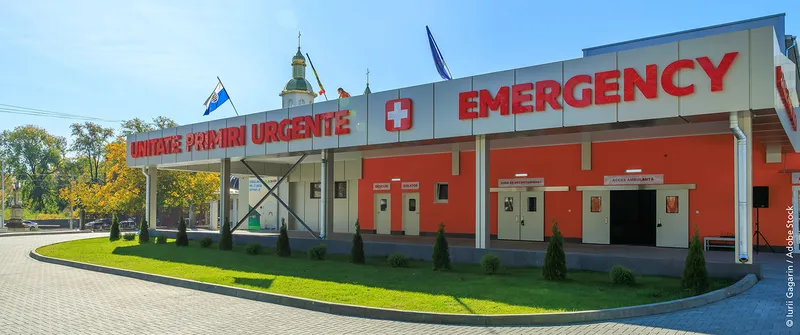
The Republic of Moldova’s hospital system, inherited from Soviet times, is expensive to maintain and operate, and is characterised by outdated equipment. The government has committed to reforming the tertiary healthcare system and to furthering quality health service delivery, in particular by decentralising tertiary healthcare in the northern and southern regions.
The CEB’s €86 million loan to the Government of the Republic of Moldova finances over 80% of the costs associated with the construction of a new regional hospital in the northern city of Bălți, as part of this broader reform process. The new regional hospital will provide tertiary, specialised care, including oncological services, with a capacity of 340 hospital beds and 78 outpatient care beds, as well as medical training for around 150 medical students. Serving an estimated 900 000 inhabitants from the north of the country, the hospital will facilitate access to highly modern healthcare services with state-of-the-art equipment, as well as improved patient response times.
©CEB 2024
In this section
Related publications
-
Report of the Governor 2023
The Council of Europe Development Bank (CEB) had an exceptional year in 2023, with Ukraine joining as the … Published: April 2024 Read