Promoting inclusive and resilient living environments 2025
The CEB’s loans for social and affordable housing, as well as other social infrastructure, aim to strengthen resilience in urban, rural and regional communities while promoting environmental protection. In 2025, the CEB issued 28 loans in 15 countries totalling over €2.6 billion to address social and affordable housing and urban, rural and regional development as well as natural and ecological disasters. Examples from two CEB loan projects in Serbia and Slovenia are detailed below.
Connecting rural communities in Serbia

Serbia faces deep regional disparities: 125 out of 145 municipalities lag behind the national average in income and access to services. These gaps are closely linked to the poor state of local roads, which comprise 70% of the network and are essential for last-mile connectivity. Nearly half remain unpaved, leaving communities isolated during adverse weather conditions and limiting access to healthcare, schools, jobs, and local markets. In response, the Ministry for Construction, Transport and Infrastructure (MCTI) launched a nationwide call for municipal proposals to rehabilitate roads in 2024, identifying 3 000 kilometres in need of repair, with a total estimated cost of €650 million.
A €200 million CEB loan to Serbia will co-finance the renovation of many of these roads. Works will include asphalt resurfacing, drainage system upgrades and measures to ensure year-round accessibility and climate resilience. Thanks to a prioritisation methodology developed jointly with the MCTI, CEB funding will support the municipalities most in need. In total, the loan is expected to improve everyday life for about 1.5 million people in the country’s least developed municipalities.
Championing municipal infrastructure, including social housing in Slovenia
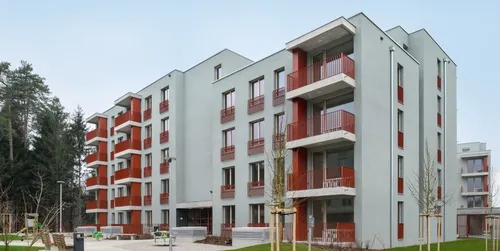
Like many European countries, Slovenia faces significant challenges related to its limited housing stock and escalating demand for homes. However, since the launch of its first National Housing Strategy in 2000, Slovenia has shown its commitment to proactively addressing this issue. This includes identifying pressing needs for municipal investments in social infrastructure, particularly housing, thanks to a joint market study undertaken with the CEB in 2021.
A €50 million loan to the Slovenian Export and Development Bank (SID Banka) – its fourth from the CEB for housing activities – will finance municipal infrastructure projects in the country, addressing critical challenges and promoting sustainable growth. The CEB loan will support housing initiatives that benefit low-income households and other vulnerable groups, as well as promote social cohesion; it will also respond to disaster-recovery needs in the wake of severe floods in 2023. The project exemplifies the CEB’s commitment to inclusive, resilient and sustainable communities in Europe, combining its long-term financing and SID Banka’s strong governance framework, cost-efficiency and local impact in Slovenia’s municipalities.
©CEB 2026