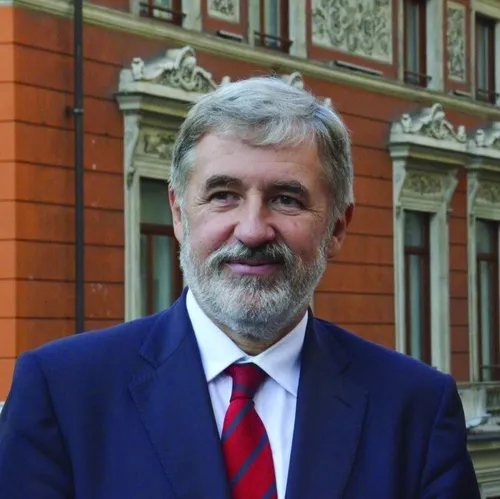
Interview with Marco Bucci, Mayor of Genoa
Addressing urban inequalities is essential to ensuring that the COVID-19 response is inclusive. What measures is your city taking to mitigate the social and economic Impact of the pandemic, particularly on the most vulnerable?
 Cities are the frontline to cope with the COVID19
emergency. In Italy the lockdown started on 9 March for more than two
months; during that period the Municipality put in place strong actions,
big and small, to foster resilient sustainable
recovery for people and strategic assets.
Cities are the frontline to cope with the COVID19
emergency. In Italy the lockdown started on 9 March for more than two
months; during that period the Municipality put in place strong actions,
big and small, to foster resilient sustainable
recovery for people and strategic assets.
The
social impact of the COVID19 affects the populations, exacerbates
vulnerabilities, reduces the livability of the territory. The economic impacts
lie on a different level, from small shops to the big enterprises, but all of them are strongly
interconnected and interdependent. The business continuity helps people to move from the emergency and coping phase and to grow
robust and mature immediately after, dealing with new challenges.
My mission has been, and it continue to be, to ensure continuity management, to strengthen trust in the citizenship and the socio economic fabric despite the circumstances, trying to re-shape the new normality leaving no-one behind.
During the spread of the virus in the city a strong collaboration and a shared task force has been established with the regional staff (in charge of health issues according to Italian laws); containment measures have been put in place, individual protection equipment has been distributed to the population, especially to the most vulnerable ones. People in quarantine have been reached by proximity services such as the waste collection, health care facilities and medicines supply, or assisted with moving to avoid contamination of their families.
Policemen, volunteers and of civil protection department helped with the distribution of meals, medicines and basic services to the elderly at home and people on low income. The civil servants monitored the social distancing through the redesign of home services for the elderly and disabled via online facilities (organized groups for self-help, cartoons for children, video calls in residential care homes, online cultural utilities, free library services, virtual tour in museums and cultural heritage, home-schooling).
Moreover, the Municipality postponed tax and fee collection from private companies affected by economic losses due to the lockdown, suspended paid parks in the city and, when possible, re-drew outdoor spaces to allow lunch and bar services to reboot. Streets and public transport services have been adapted to the different demand taking all safety measures both for the employees and the people (dispensers with sanitary gel on the buses, clear indications for the flow management, disinfecting all public services facilities, buildings and so on).
How is your city ensuring that the COVID-19 recovery is also a green one that meets climate change goals?
 Lowering
our carbon footprint is a clear statement to achieve our goals. Climate chante adaptation and mitigation, energy efficiency, circular economy, innovative infrastructures and appplied technologies, sustainable mobility with all
interested sectors are the main pillars of our vision.
Lowering
our carbon footprint is a clear statement to achieve our goals. Climate chante adaptation and mitigation, energy efficiency, circular economy, innovative infrastructures and appplied technologies, sustainable mobility with all
interested sectors are the main pillars of our vision.
Recently we approved a resilient city strategy named Lighthouse and we are working hard on our Sustainable Energy and Climate Action Plan to cut emission of 40% within the 2030 and to adopt an adaptation set of measures by this year. These great commitments deal with climate, demographic change and digital transition trends anticipating their effects and fostering urban regeneration in all fields and sectors.
In the forthcoming Lighthouse Action Plan 2050 we will embed in the existing three key assets (GREY, GREEN, SOFT) and six focus of interventions the related effects of the COVID19, as a shock to the city and a socioeconomic stressor.
Right now we are drafting a series of green, soft and grey combined measures to re-draw public spaces, to put in place green sustainable connections and clean air paths to help the people to enjoy the city under new rules.
We are re-shaping the roads with pedestrian and bike-lines combined with smart mobility service facilities to meet the new mobility paradigm and service demand and we’re working on the rational management of the water resource, boosting the optimization and renewal of the infrastructures of the drainage system in the urbanized areas.
What long-term investments are required to increase your city’s preparedness to future pandemics and boost its resilience to shocks?
 In our
context, to be more effective in grounding our actions and reaching a more
robustness of the city ecosystem it is necessary to enhance the capacity to
better use the internal and external resources and to make use of the new
routes given by the European Commission, in joint collaboration with all the
level of governance.
In our
context, to be more effective in grounding our actions and reaching a more
robustness of the city ecosystem it is necessary to enhance the capacity to
better use the internal and external resources and to make use of the new
routes given by the European Commission, in joint collaboration with all the
level of governance.
To be more prepared to future scenarios of shocks and stress including the pandemic one at local level, we envisage strong commitment and investment on knowledge and awareness, through innovative training activities.
These will increase our soft skills and enhance the city ecosystem governance model by building a common baseline that uses an enabling language as a bridge to reach the people, the private entrepreneurs, the decision makers, the scientists and the politicians to work together towards the 2030 and 2050 global targets.
Partnerships and collaborative efforts are critical to support local leaders in the COVID-19 recovery. What do you expect from the cooperation with national and European actors?
We have a long past tradition in participating and commitment to networks and partnership at regional, national, EU and transnational level.
Learning from each other, sharing experiences, building together solutions to common problems are enabling factors to grow and to reinforce relationships among cities in our and different countries.
The collaboration with other entities both public and private on global issues allow us to improve our capacity building to downscale tailored solutions that are more aligned with the global market and trends. In the past this has helped us to strengthen our response ability to shock and stresses.
Now our intention is to reinforce these relations to be better prepared to meet the future challenges under the co-working paradigm and to find new ones to achieve common preparedness models, common standardized measures and metrics and common sustainable paths.
Related publications
-
INFO 01/02 2020
Explore the INFO magazine #1-2 2020, spotlighting social cohesion, urban development, and resilience across Europe.Discover how the the … Published: April 2020 Read -
Technical Brief - Promoting Inclusive growth in Cities - September 2018
This technical brief contributes to the discussion among practitioners on how European cities can grow more inclusively. Published: October 2018 Read